Cooking-only
Arrive at the venue, focus on preparation and cooking, then eat what you make.
Better when- Technique is your main priority.
- You already visited a market or Cam Thanh.
- You want a shorter, more focused session.
Informational decision guide · Reviewed August 2026
A Hoi An cooking class can mean a focused lesson at a cooking station, a market visit followed by cooking, or a half-day combination with countryside activities. Understanding the format matters more than choosing the first attractive listing.
A representative flow
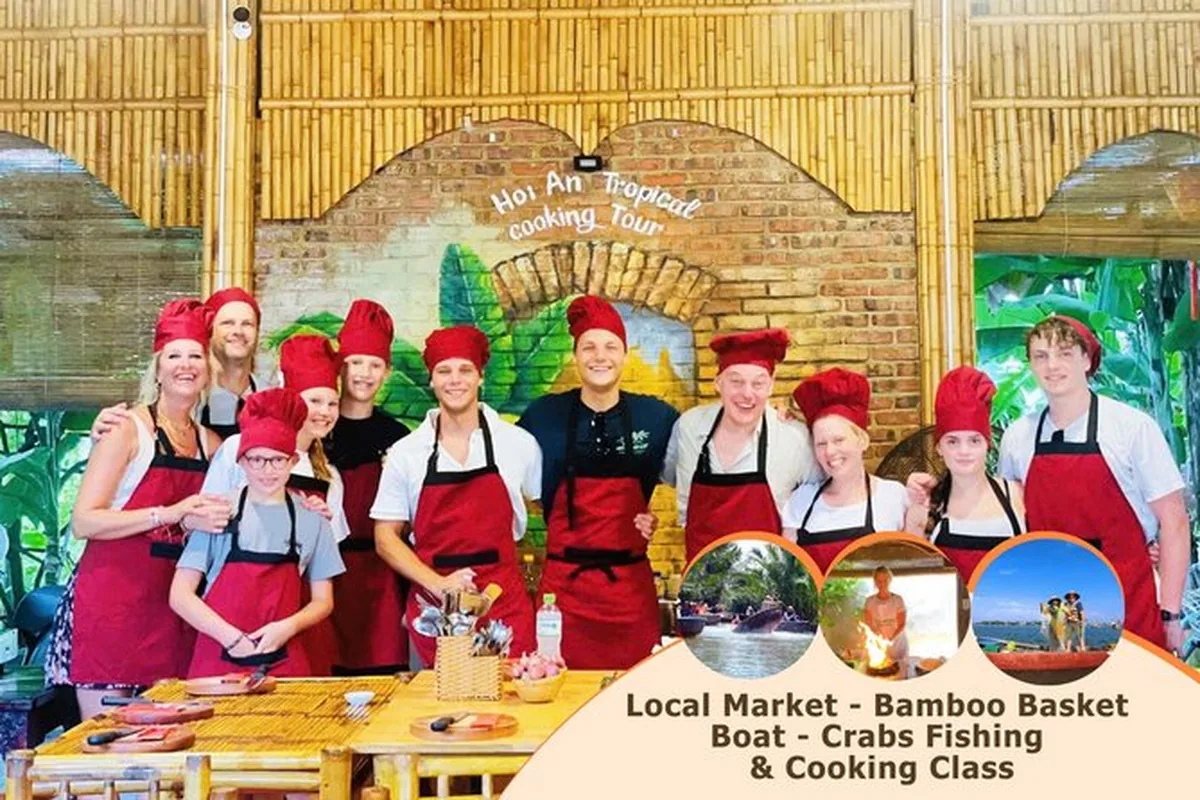
A combination experience may begin with pickup or a meeting point, continue through a market or ingredient introduction, add a countryside activity, then move to preparation, guided cooking and eating. A cooking-only class normally starts at the venue and protects more of the session for instruction.
Meet or arrive
Explore ingredients or an optional local activity
Prepare and cook with guidance
Eat the dishes and finish the experience
Choose the experience before the provider
Arrive at the venue, focus on preparation and cooking, then eat what you make.
Better whenAdds ingredient context before the class when the market visit is purposeful.
Better whenMay combine a market, countryside or farm setting, basket boats, transport and cooking.
Better when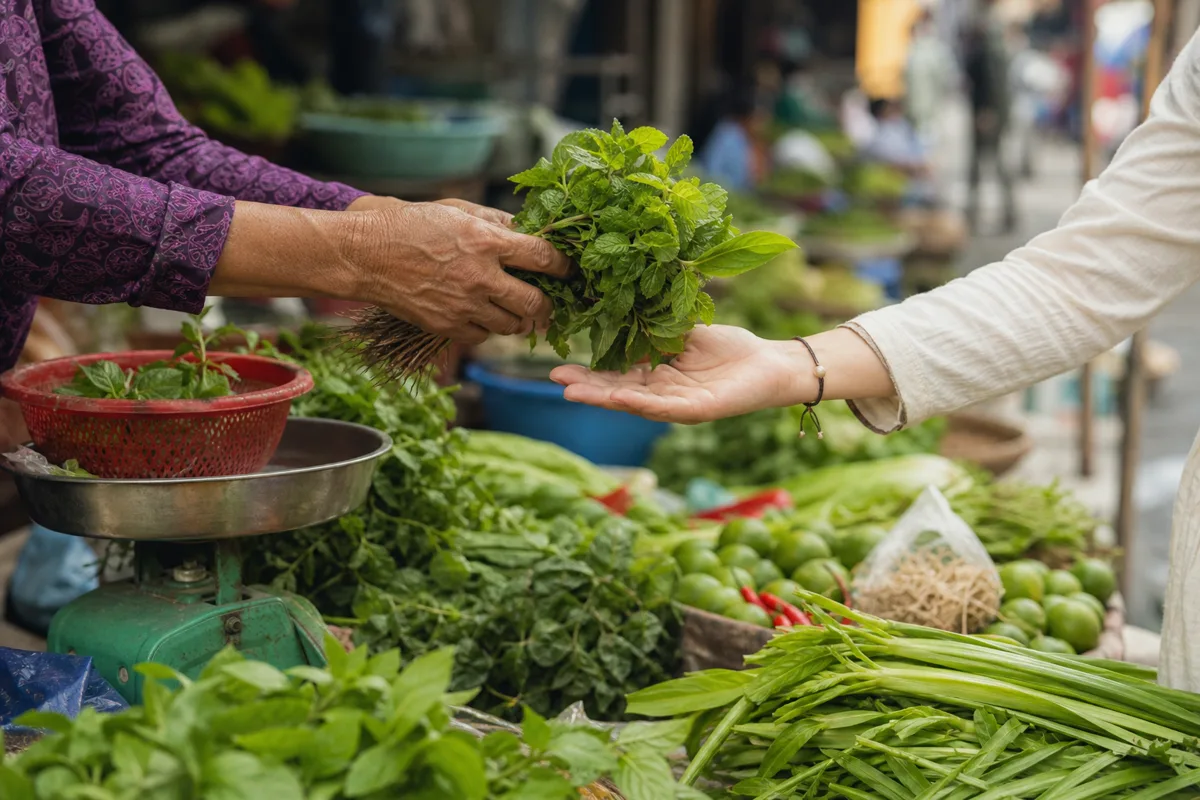
Information gain, not a walk-through
A useful market segment helps you see ingredients, smell herbs, identify produce, observe selection and understand how those ingredients connect to the dishes you will cook.
A weaker visit can become a quick walk while the guide talks and the group moves on. That does not make all market tours superficial; it means travelers should check what interaction and explanation are included.
More variety, less focus
Combination experiences can place several recognizable Hoi An activities into one half-day block. That can be efficient and enjoyable for first-time visitors.
If the garden itself is part of the appeal, see the cooking and farming experience at Tra Que Garden →
Participation varies
The label “cooking class” does not guarantee that every guest prepares every ingredient or cooks every dish independently. Some sessions use individual stations; others divide work across a group or combine demonstrations with selected hands-on steps.
A strong class teaches techniques and decisions you can use again—not only a one-time performance that produces a good photograph.
Attention changes with scale
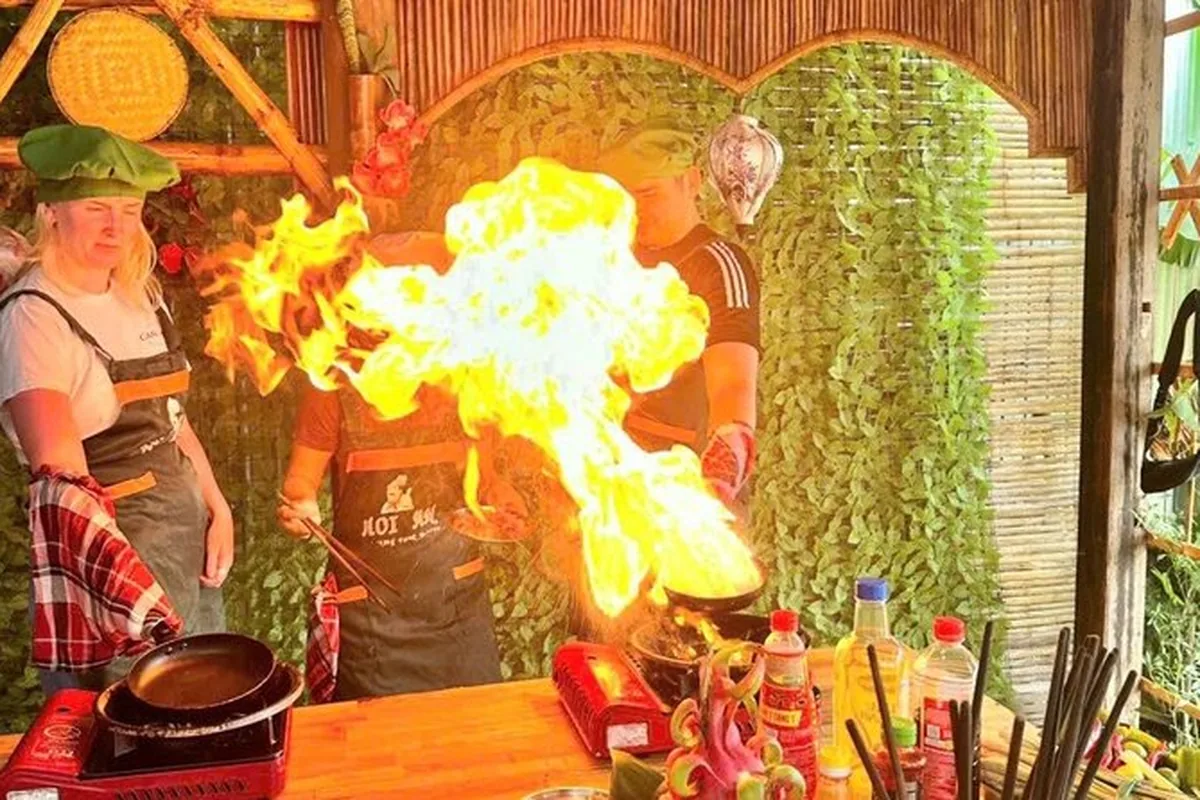
Based on HAL's current operational observation, a class around 15 guests or more can begin to feel meaningfully larger. This is an editorial reference—not an industry definition or proof of quality.
Easier questions, more instructor attention and often a calmer pace.
Potentially more social and energetic, while instructor attention is distributed more widely.
Staffing, room layout and teaching method can matter as much as the headline number.
The menu is only the beginning
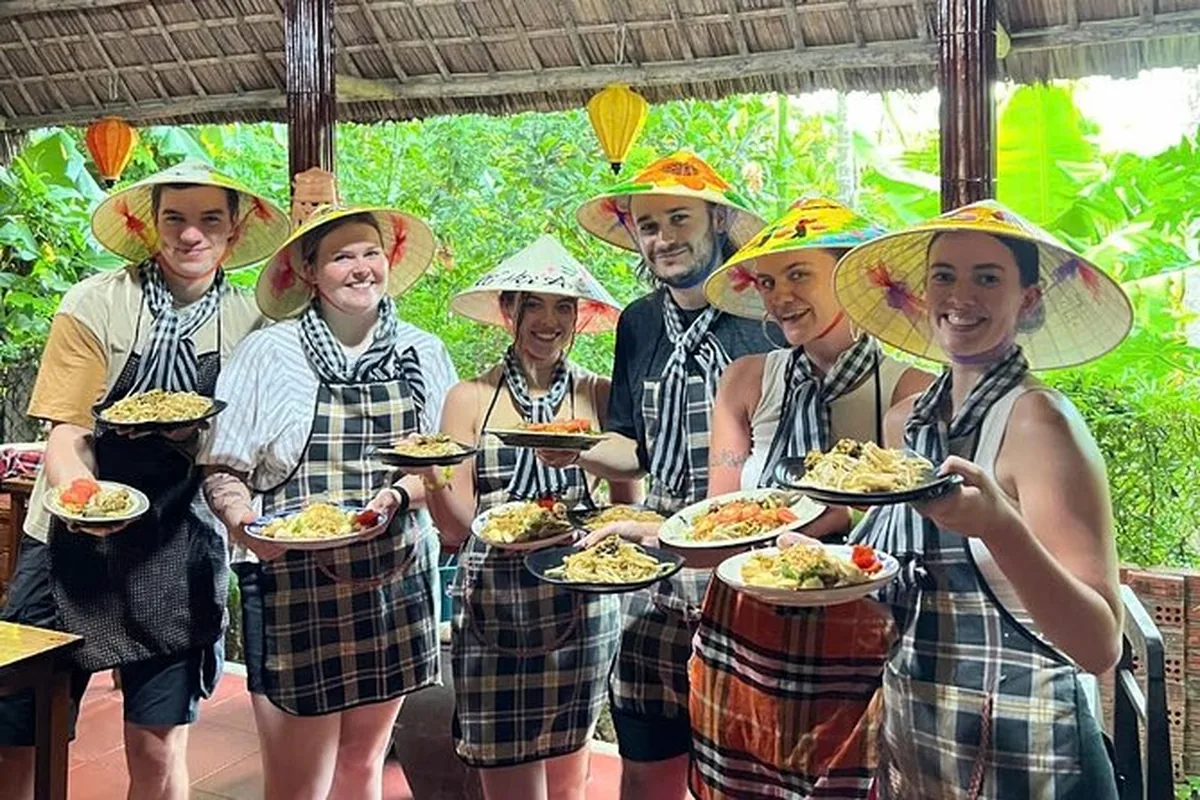
Menus vary by provider and may include different numbers of dishes, preparation steps and levels of participation. A long menu does not automatically mean more learning if key work is completed before guests arrive.
Use the Hoi An Food Guide for broader dish context. Individual classes do not necessarily teach cao lau or banh xeo.
Contact the provider before arrival
Vegetarian, vegan, no-pork, seafood-free, nut-free, dairy-free and gluten-free requests may require different ingredients, sauces or preparation. Do not assume every provider can accommodate every restriction.
Ingredient substitution and cross-contact control are different questions. Removing an ingredient does not establish that shared knives, boards, pans, oil, sauces or work surfaces are suitable for someone with coeliac disease or a serious allergy.
This is risk-reduction guidance, not a medical or kitchen-safety guarantee.
Match the class to the child
They can be engaging because children touch ingredients, follow visible steps and eat the result. Suitability still depends on the child, class length, venue and how much active supervision is available.
Children using knives, heat or cooking equipment should be actively observed rather than assumed to manage independently.
Plan the wider Hoi An family trip →Use half a day deliberately
Before choosing a listing
Cooking-only or combination?
Which activities and transport are included?
Is the market visit interactive or mainly observational?
Individual workstation or shared cooking?
Expected group size?
Menu, number of dishes and who cooks each one?
Dietary requirements confirmed in advance?
Child policy and supervision?
Total approximate duration and pickup?
Recipes, instructions and optional costs?
Now compare the right format
Once you know whether you want cooking-only, market context or a broader half-day combination, use our separate comparison page to evaluate current experience options. Prices and availability belong there rather than in this evergreen guide.
Compare Hoi An Cooking ClassesEditorial basis
This guide uses HAL's current owner/operator observations about class flow, market interpretation, teaching quality, group scale, dietary preparation and child supervision. Broad judgments are presented as guidance rather than universal provider standards.
Read more about our editorial methodology.