Firm, lively noodles
They should offer resistance without feeling hard or dry.
A first-timer guide · Reviewed August 2026
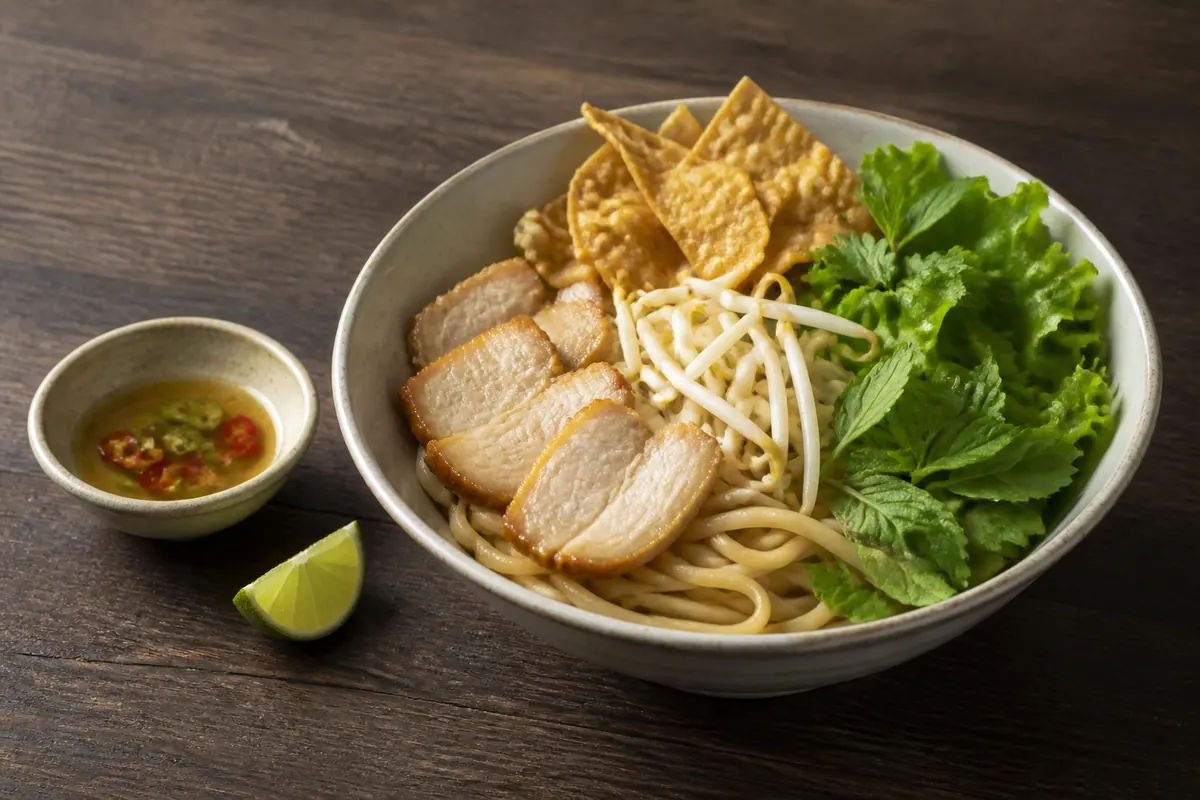
Cao lau is Hoi An's defining noodle dish: thick, chewy noodles, char siu-style pork, fresh herbs, bean sprouts, crisp rice elements and only a small amount of concentrated sauce. It is not a bowl of noodle soup.
Quick answer
The dish
Cao lau is a dry-style noodle dish associated with Hoi An. A typical bowl combines thick rice-based noodles with sliced pork, fresh herbs, bean sprouts, crisp rice pieces and a small amount of rich sauce. Individual cooks vary the pork, herbs, sweetness, seasoning and crisp elements.
The bowl makes sense through contrast. The noodles provide chew; pork and sauce bring depth; herbs and sprouts keep it fresh; crisp pieces interrupt the softer textures. If you approach it expecting pho, the lack of broth may seem surprising. That is part of the design, not an omission.
Sauce, not soup
The liquid in cao lau is intended to season and coat the noodles. It commonly comes from the seasoned pork and its cooking liquid, producing a concentrated savory-sweet layer rather than the large volume expected in pho.
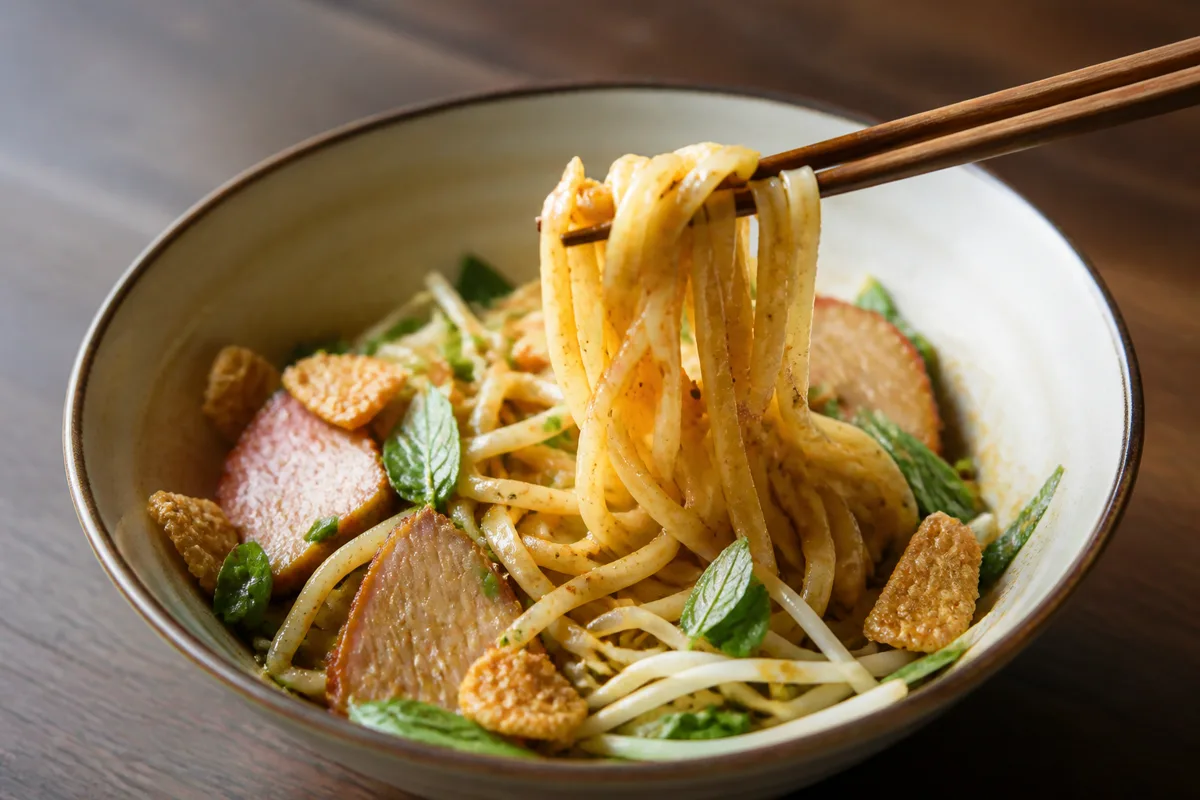
Before judging the bowl as dry, mix it. A few turns bring the sauce up from the bottom and distribute it across the noodles. The low-liquid structure also helps the noodles retain their chew and the crisp elements remain distinct.
Read the bowl
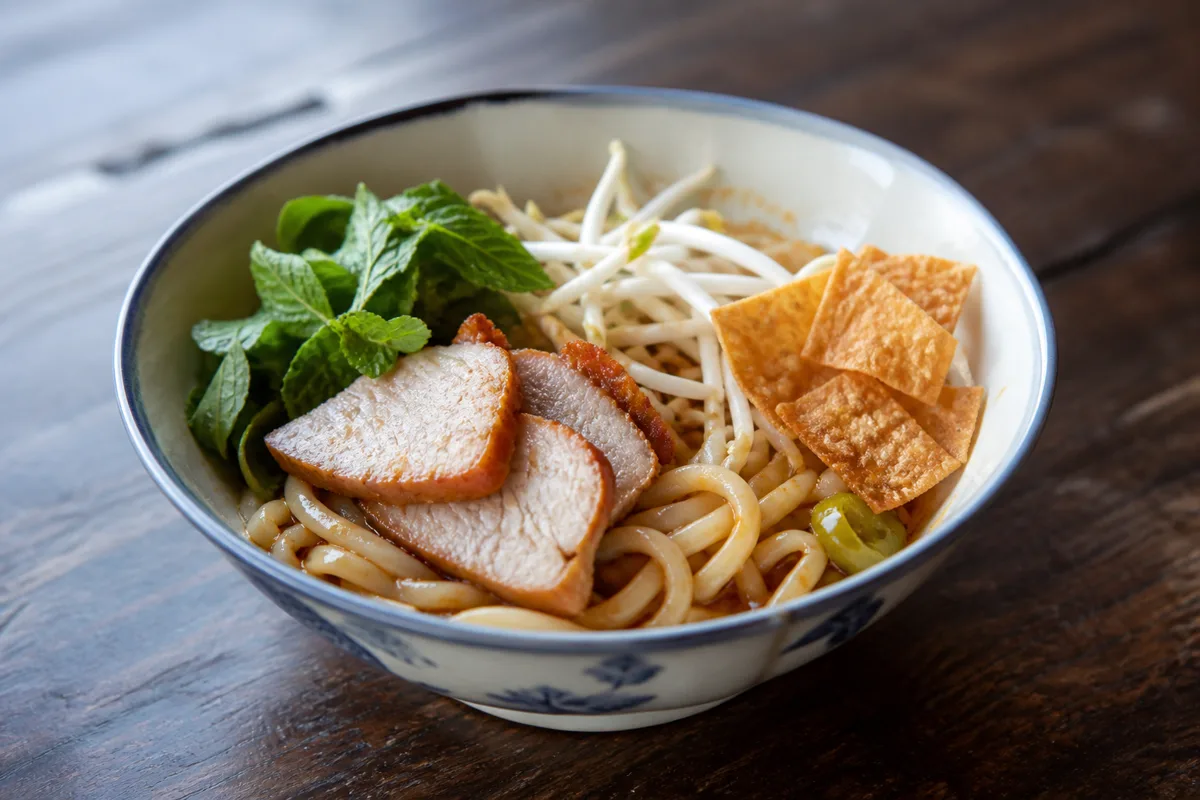
Rice-based noodles with a notably firm, chewy texture. Their bite is one of the clearest differences from softer soup noodles.
Sliced, seasoned pork commonly supplies the savory center of the bowl. Preparation and sweetness vary.
Fresh greens and sprouts add fragrance, coolness and crunch rather than serving only as decoration.
Crackers or fried noodle pieces provide the crisp contrast that helps define the eating experience.
A small amount gathers at the bottom and coats the noodles when the bowl is mixed.
Traditional method, careful wording
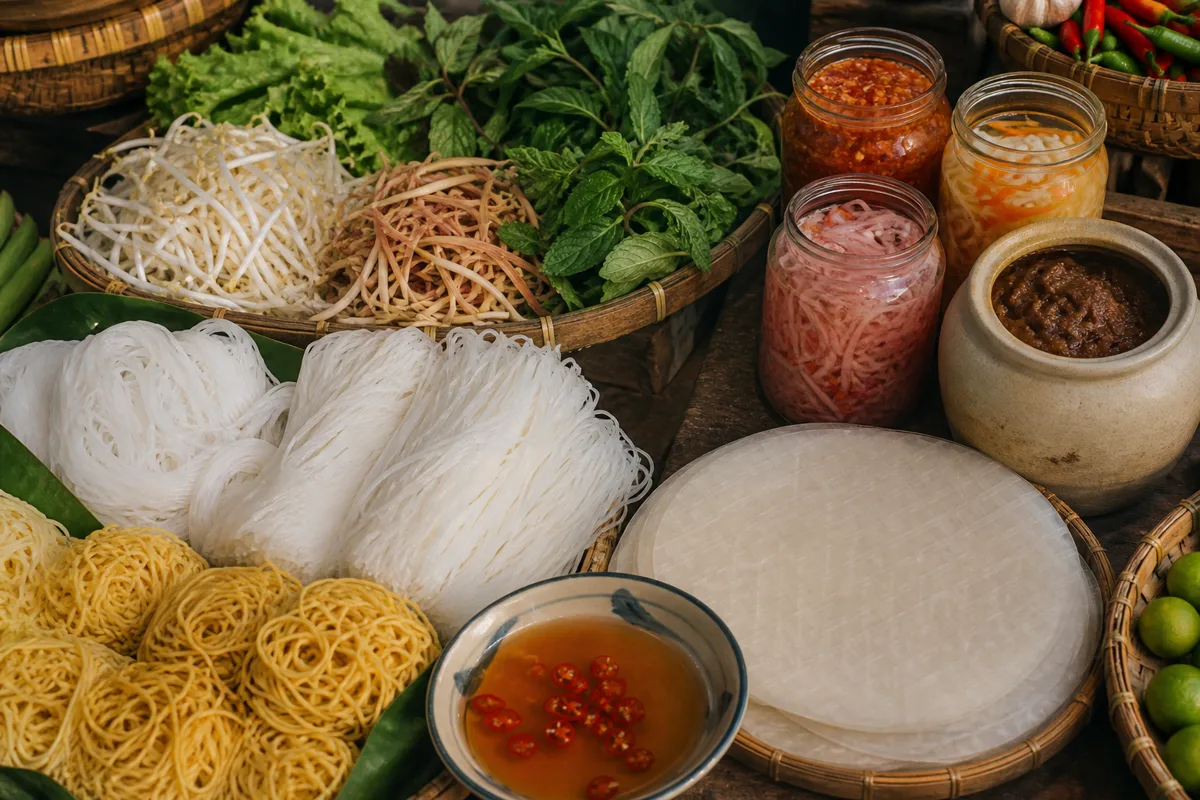
Local and official tourism accounts repeatedly describe rice being treated with alkaline ash water before the noodles are steamed and cut. This alkaline treatment is commonly linked with the noodle's firm texture and muted yellow-brown color.
Published descriptions differ on the rice, ash source and exact process. Those differences matter: the safest conclusion is that alkaline treatment is a repeated traditional account, not that every modern producer follows one identical formula.
Fact vs tradition
Ba Le well is a documented old well in Hoi An and official local heritage material strongly associates its water with traditional cao lau production. The link is an important part of how the dish is explained locally.
What cannot be established from the bowl is whether a particular noodle producer or restaurant used that water. Even Vietnam Tourism notes that strict “purist” practice is unlikely to be universal today. HAL therefore treats Ba Le water as a verified cultural association and traditional claim—not a test that decides whether every modern bowl is genuine.
History without a neat myth
Hoi An's role as an international trading port from the 15th to 19th centuries is well documented by UNESCO. Its architecture and culture reflect local and foreign influences, including Chinese, Japanese and later European connections.
That context makes cross-cultural influence plausible, but it does not prove one specific origin for cao lau. Tourism accounts variously point to Japanese noodles, Chinese-style pork or local invention. The more honest answer is that the dish's exact origin remains debated.
Enjoy the stories as part of Hoi An's food culture, but be cautious when one explanation is presented as settled historical fact.
Avoid ordering by name alone
Both belong to Central Vietnam and can use relatively little liquid, but they are not interchangeable.
| Feature | Cao lau | Mi Quang |
|---|---|---|
| Strongest association | Hoi An | Quang Nam–Da Nang region |
| Noodle | Thick, firm and chewy | Broad rice noodle, often white or yellow |
| Liquid | A little concentrated sauce | Small amount of seasoned broth, usually not enough to fill the bowl |
| Common protein | Char siu-style pork | May include pork, chicken, shrimp, fish or combinations |
| Finishing elements | Herbs, sprouts and crisp rice pieces | Herbs, peanuts and rice cracker are common |
| Defining impression | Chew and concentrated coating | Broader variation in broth and toppings |
Recipes vary by cook. This comparison is a decision aid, not a universal recipe standard.
The first bite
There is no need for ceremonial precision. Mixing simply allows the ingredients to work as one dish instead of five separate components.
The HAL view
Yes. For a first visit, it is one of the clearest ways to understand Hoi An through food. Its strong local association, unusual low-liquid structure and combination of chewy, soft, fresh and crisp textures make it meaningfully different from simply ordering another noodle soup.
That does not mean every traveler must love it or every bowl will be equally good. Try one thoughtful serving before turning the dish into a restaurant checklist.
Variation is normal
They should offer resistance without feeling hard or dry.
The bowl should become integrated after mixing, not turn into soup.
Herbs and sprouts should brighten the pork and sauce.
Crisp pieces should still be crisp when the bowl arrives.
One vendor's sweeter pork or firmer noodle does not automatically make another version wrong. Freshness, texture and balance matter more than matching a single internet photograph.
Ask, do not assume
Traditional or common cao lau normally contains pork, and its sauce may include animal-derived cooking liquid. Vegetarian and vegan versions exist, but they are adaptations: removing visible pork does not establish that the sauce or stock is meat-free.
Although the noodles are generally rice-based, a bowl of cao lau should not automatically be treated as gluten-free. Marinades, soy sauce or other seasonings may contain wheat, and shared utensils, preparation surfaces, crisp components or oil can create cross-contact.
HAL cannot verify individual kitchen practices. Discuss medical dietary needs directly with the restaurant or a knowledgeable guide.
Explore more Hoi An food
Use the broader food guide to compare Hoi An's first-timer dishes, visit the market guide to understand ingredients, or fit meals into a short stay.
Learn through cooking
A well-run cooking class can connect market ingredients and preparation techniques. Check the menu first: not every class teaches cao lau, and a short visitor class may simplify specialist noodle-making.
Compare Hoi An Cooking ClassesHow this guide was checked
Place history was checked against UNESCO's Hoi An Ancient Town record. Cao lau method and Ba Le context were compared across the Hoi An heritage portal, its Ba Le well record, Da Nang tourism guidance and Vietnam Tourism. Mi Quang context was checked against the Da Nang tourism portal.
Where sources disagree or use legend-based language, HAL says so. Read more about our editorial methodology.