Best for food-market activity
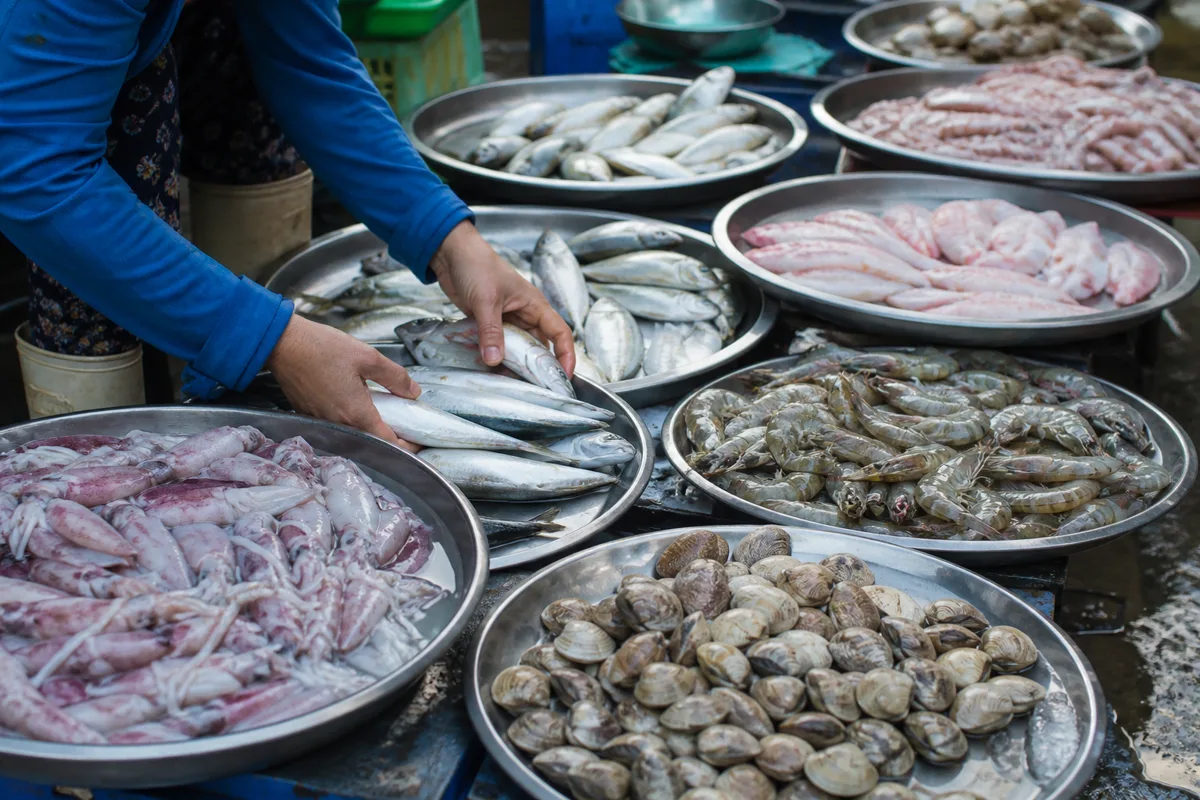
Fresh produce, meat, fish and seafood movement is generally most interesting. It is also cooler for walking.
A purposeful first visit · Reviewed August 2026
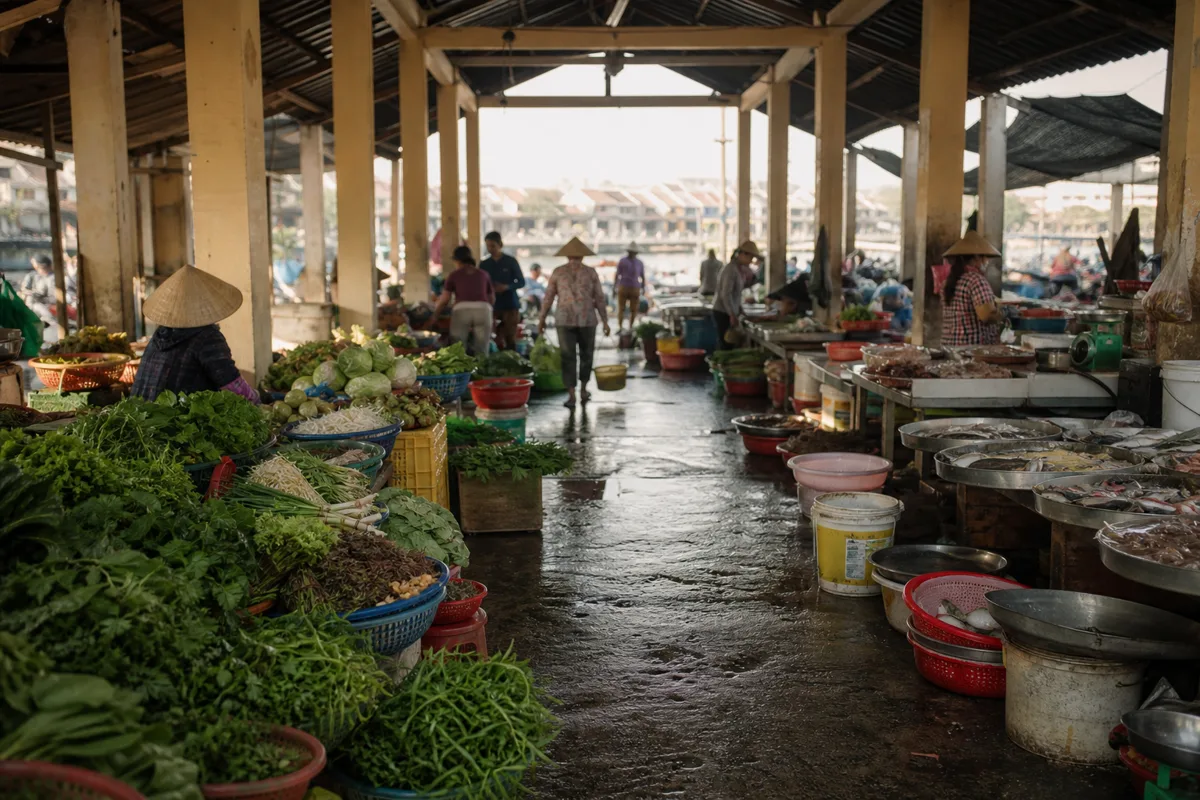
Hoi An Market makes more sense when you treat it as a working food market, not a backdrop. Go with a few ingredients in mind and the stalls begin to explain the dishes you will eat around town.
Quick answer
The place
Hoi An Market is the traditional market on Tran Phu Street near the Bach Dang riverside area in the Ancient Town. Official tourism descriptions group its stalls around produce, spices, seafood, dried goods, household items, clothing and souvenirs.
For this guide, “Hoi An Market” means that central working market—not the evening visitor experience commonly called the night market. The morning food areas and the night market serve different purposes.
The useful mindset is simple: vendors are buying, selling, preparing and moving food for the day. Observe the system around you rather than expecting every aisle to perform for visitors.
Place and market composition checked against the Da Nang City Tourism Information Portal.
Timing changes the character
The windows below are planning guidance from current local observation, not fixed hours for every stall.
Fresh produce, meat, fish and seafood movement is generally most interesting. It is also cooler for walking.
A practical choice for most travelers who want morning activity without the earliest start.
Some early trade has eased and the weather can feel hotter. The market is not “finished,” but you see a different stage of the day.
Expect a different product mix and pace. Go if it fits your route, but do not expect the same morning food-trade energy.
Look with purpose
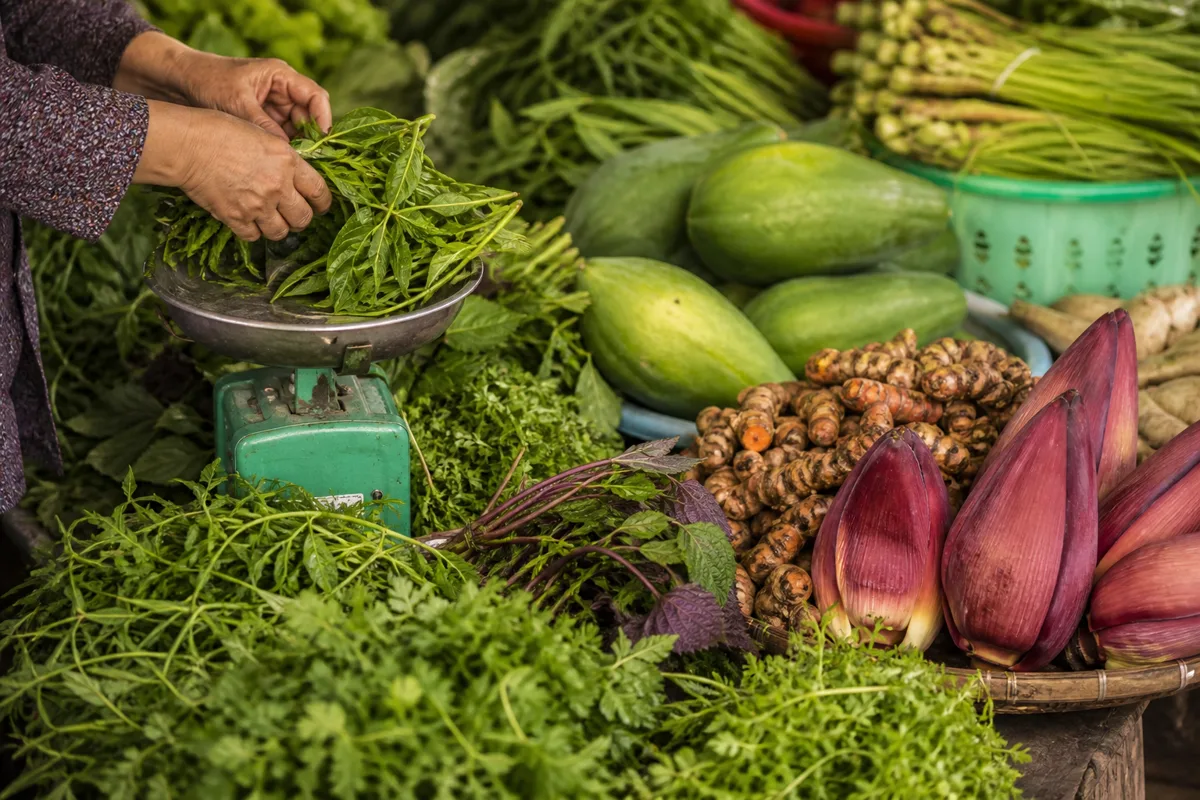
Many visitors cross the market quickly, photograph the color and leave. Slow down just enough to notice how a working aisle is organized.
Ingredient → dish
The links below are common and useful, not universal recipe rules.
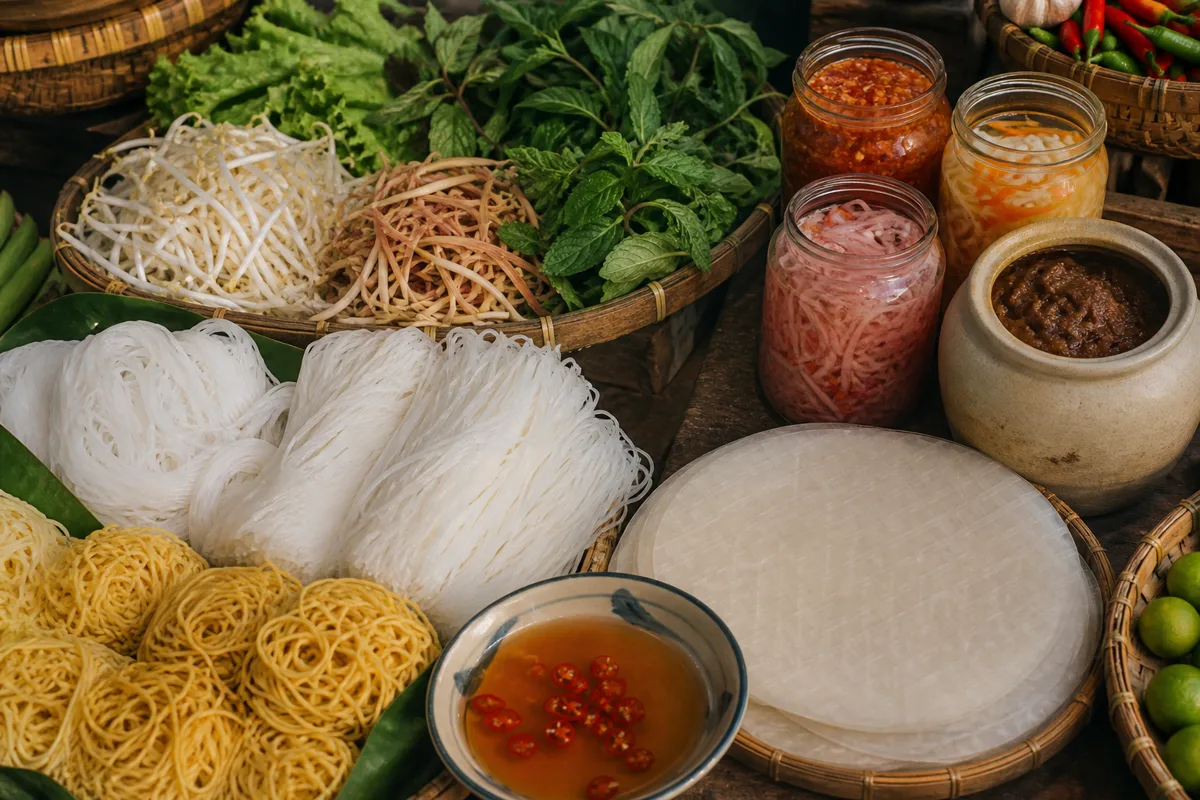
Herbs bring fragrance and contrast to cao lau, Mi Quang, banh xeo wraps and many family meals. The mix varies by cook and season.
Look for it shredded into crisp, tart salads or served as a fresh accompaniment. It may appear beside Hoi An chicken rice, but not every vendor uses it.
Finely sliced banana blossom adds crunch and a gently astringent note to salads and herb mixtures. Ask how a vendor plans to prepare it rather than assuming one fixed use.
Turmeric contributes color and earthy flavor to Central Vietnamese cooking. It is often associated with Mi Quang and banh xeo batter, although recipes differ.
Fresh, dry and grilled rice papers serve different jobs: wrapping banh xeo, making rolls, or providing the crisp layer in banh dap.
Compare thick cao lau noodles with broader Mi Quang noodles and fine rice noodles. Their shape and texture help explain why these dishes eat so differently.
These are seasonings and dipping-sauce foundations, not one interchangeable product. Flavor, intensity and ingredients vary, so travelers with allergies should ask specifically.
The fresh food areas show the everyday building blocks of local meals. Availability changes with supply, season and the time of day.
Official Vietnam Tourism material describes cao lau with thick noodles, pork, bean sprouts and fresh herbs, while its banh xeo guidance shows the pancake wrapped with rice paper and greens. Tra Que references connect local herbs and vegetables with dishes including cao lau, Mi Quang and banh xeo; that does not prove every market bundle came from Tra Que.
What visitors often miss
A purposeful visit asks small questions: Which herb will be eaten raw? Which noodle belongs to which bowl? Is the banana blossom destined for a salad? How will the turmeric be used?
You do not need to interrogate a busy vendor. A guide, cook or willing seller can sometimes name an ingredient and connect it to a dish; otherwise, note it and look it up later. The goal is understanding, not turning work into a demonstration.
Respect the workplace
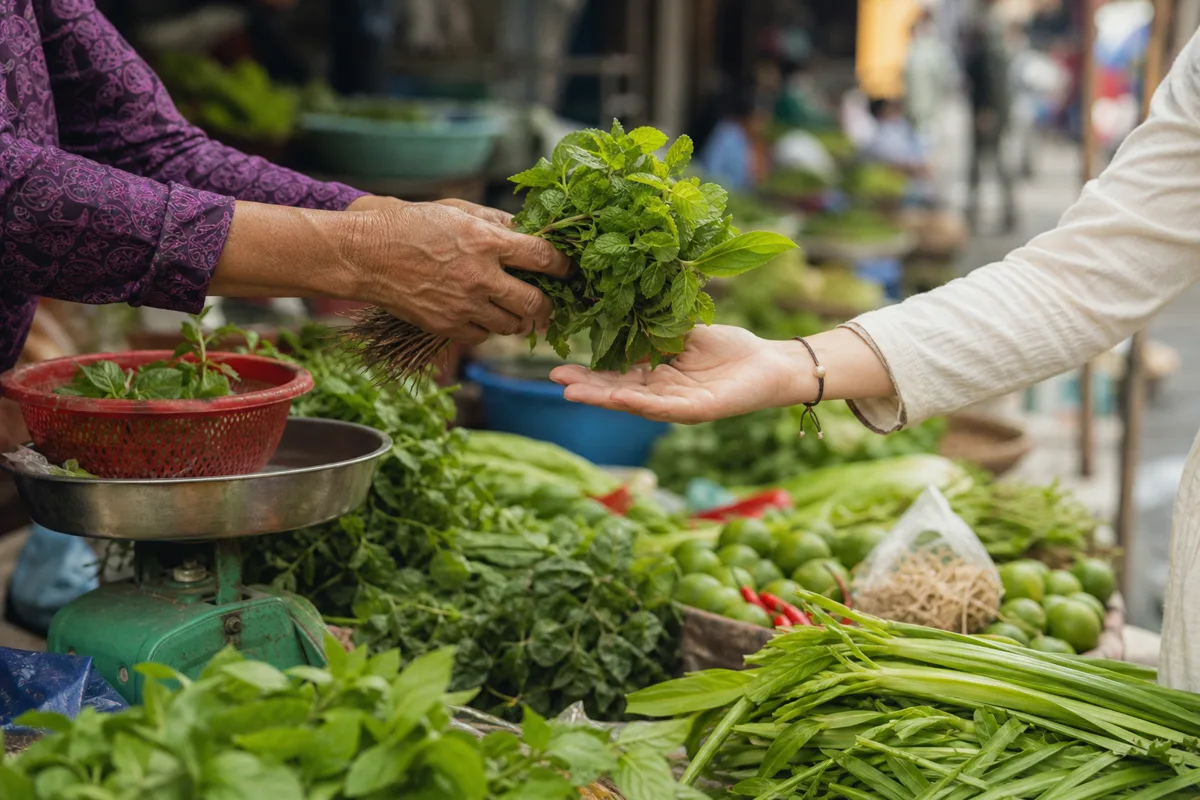
Permission is especially useful when a person would be recognizable in your photograph. A wide market scene is different from placing a camera close to someone's face or hands.
Reduce risk, never promise safety
Choose a busy stall, watch it being cooked, and eat it piping hot.
Fast turnover can be a useful signal, but it is not proof that a stall is safe. Also look for food cooked thoroughly and served hot, separation between raw and cooked ingredients, clean handling and sensible hot or cold holding.
Raw herbs and garnishes require more judgment because visual inspection cannot confirm water quality or handling. Travelers with allergies or coeliac disease should ask specifically about ingredients, sauces, shared utensils, oil and cross-contact. If communication is unclear, choose conservatively.
Public-health basis: WHO Guide on Safe Food for Travellers and the CDC Yellow Book.
Decision support
A guide adds value when you can see and smell herbs, identify unfamiliar produce, learn how ingredients are selected and connect them to dishes you will cook or eat.
A visit becomes superficial when the group only walks through while one person lectures, with little opportunity to observe ingredients or understand their use.
You can visit independently if you are comfortable observing respectfully and researching ingredients afterward. Choose a guided visit when translation, ingredient selection and dish context matter more than simply seeing the building.
From stall to plate
Use the market to understand ingredients, then use our food guide to decide which dishes deserve your limited meal time.
Read the Hoi An Food GuideHands-on context
A cooking class is useful when the market visit feeds directly into ingredient choice, preparation and tasting—not when the market is only an itinerary checkbox.
Compare Hoi An Cooking ClassesBefore you go
Choose morning if food-market activity is your priority.
Carry small notes if you expect to buy food or produce.
Wear shoes that handle wet or uneven market floors.
Keep your camera and body out of working lanes.
Pick three ingredients to recognize before you arrive.
Use the visit to inform your next dish, class or itinerary decision.