How to eat it
Mix from the bottom before the first full bite so the sauce coats the noodles. Try the noodle, pork, herbs and crisp element together; texture is central to the dish.
A local first-timer guide · Reviewed August 2026
If this is your first visit and you have time for five foods, our local view would start with cao lau, Hoi An chicken rice, banh mi, banh xeo, and banh dap with Cam Nam clams.
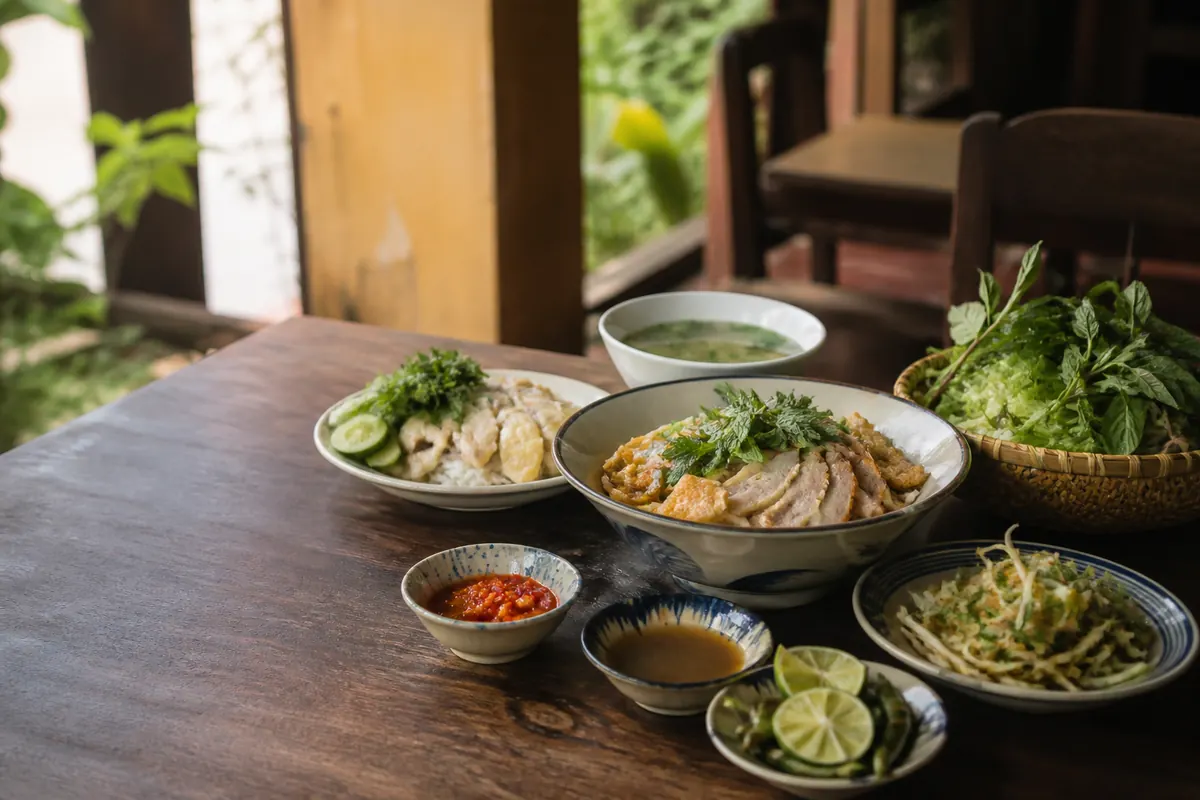
Start with five
Choose fewer dishes, then notice how each one is assembled and eaten.
Chewy noodles, pork, herbs, crisp elements and just enough concentrated sauce to coat the bowl.
Understand the dish ↓02Fragrant rice with shredded chicken and fresh, sharp accompaniments that keep the plate balanced.
Understand the dish ↓03A familiar Vietnamese format that is especially rewarding when the bread, filling, herbs and sauces stay in balance.
Understand the dish ↓04A small, crisp pancake intended to be wrapped with greens and dipped—not eaten as a plain pancake.
Understand the dish ↓05Contrasting rice-paper textures and a riverside clam tradition associated with Cam Nam.
Understand the dish ↓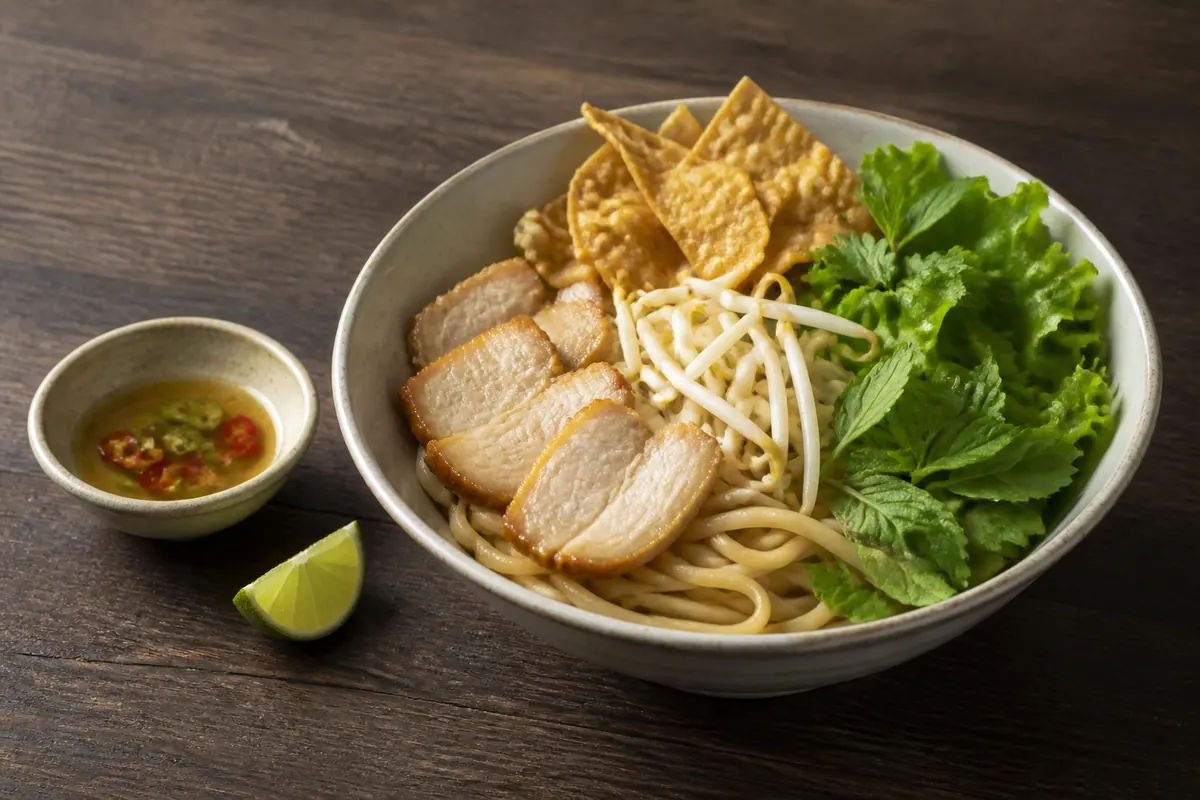
Hoi An's defining noodle dish
First, do not expect pho. Cao lau is built around thick, chewy noodles with a relatively small amount of concentrated sauce. Char siu-style pork, fresh herbs and crisp rice elements bring savory, fresh and crunchy contrasts to the same bowl.
Mix from the bottom before the first full bite so the sauce coats the noodles. Try the noodle, pork, herbs and crisp element together; texture is central to the dish.
A bowl with little liquid is not missing broth. Official local tourism descriptions also distinguish cao lau by its few spoonfuls of sauce rather than a soup-like serving.
Stories about Ba Le well water, island ash and Japanese or Chinese influence are repeated widely. Hoi An's history as an international trading port is well documented, but that does not prove one neat origin story for the noodle. We treat those production and influence stories as local lore unless stronger historical evidence supports a specific claim, and we do not assume every modern kitchen uses water from Ba Le well.
Vendors vary in noodle firmness, pork, sweetness, herbs and crisp toppings. Judge the bowl in front of you rather than looking for one supposedly canonical recipe.
Use our complete Cao Lau guide to compare the noodles, method and eating style →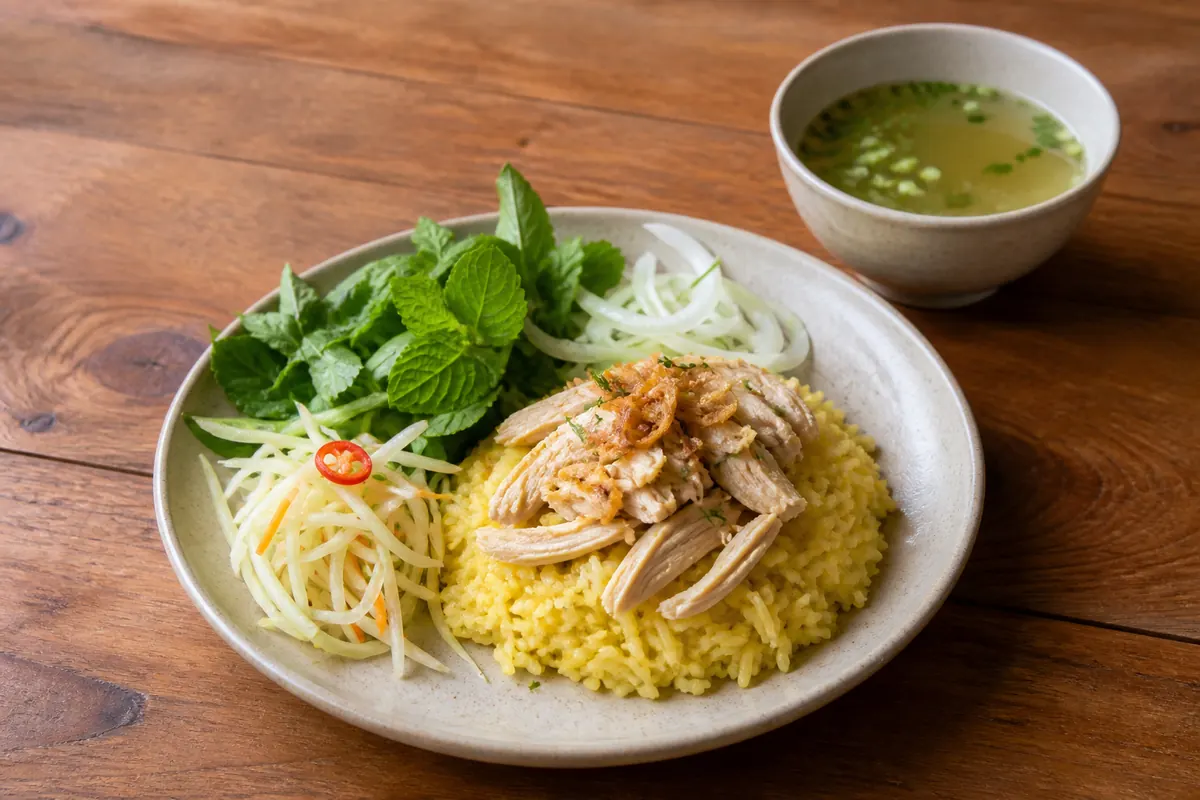
Comforting but not plain
Hoi An chicken rice commonly pairs fragrant rice cooked with chicken broth with shredded chicken, herbs, onion and tart or pickled accompaniments. Some plates include papaya salad, soup or a vendor-specific sauce.
The appeal is balance: rich rice and chicken are lifted by herbs, onion and acidity. It is more than an undressed plate of chicken beside white rice.
Taste the components, then combine them. A little salad, herb or sauce with the chicken and rice often makes more sense than eating every part separately.
Recipes and presentation differ by vendor. Turmeric, chicken broth and shredded chicken are common descriptions, but HAL does not claim every Hoi An cook follows one formula or that the dish has one uncontested origin.
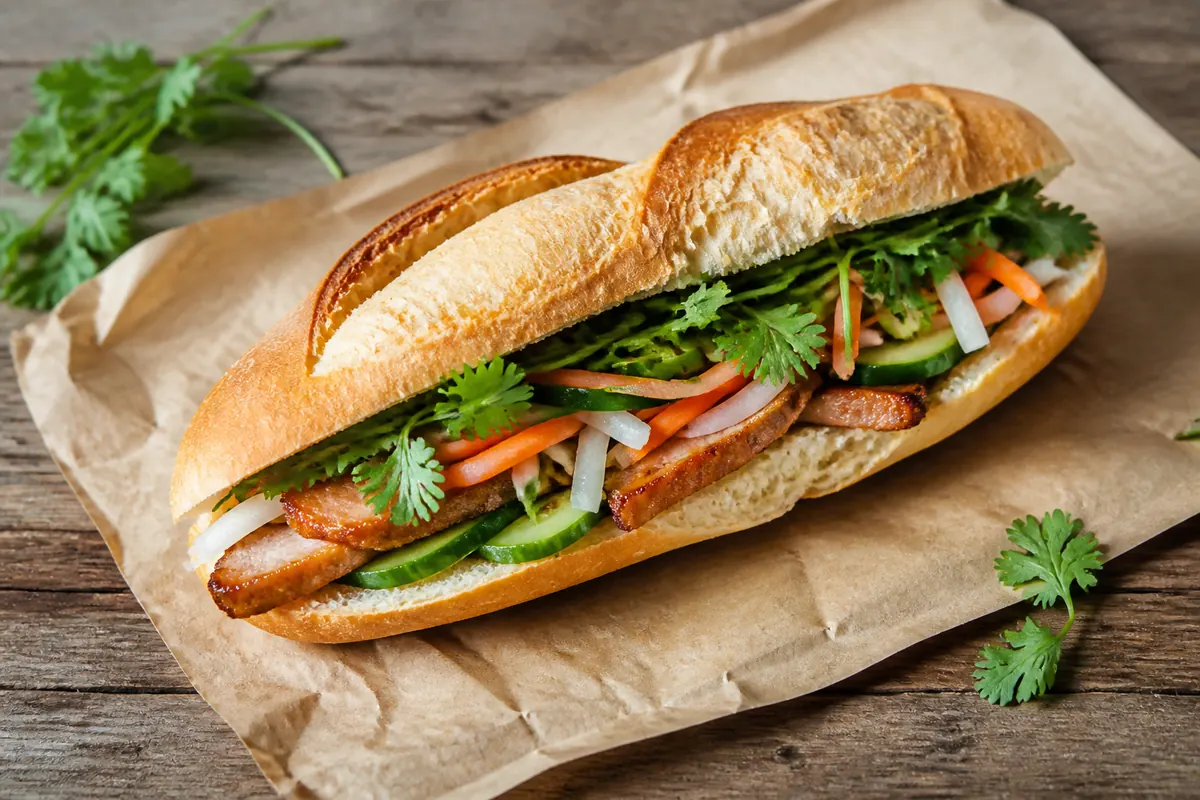
A familiar format, worth tasting here
Banh mi is found across Vietnam, and Hoi An did not invent it. It still belongs on our first-timer shortlist because a well-made sandwich shows how crisp bread, savory fillings, herbs, pickled vegetables, chili and sauce can work as one compact meal.
The best-known shop is not the only valid version. Look for a crisp exterior, bread that does not overwhelm the filling, fresh herbs and enough sauce to connect the ingredients without turning the loaf soggy.
Fillings and condiments vary widely. Ask about meat, pâté, egg, chili and sauces rather than assuming a menu name tells you every ingredient.
This guide deliberately avoids ranking banh mi shops. The decision here is whether the food belongs in your trip, not which queue has the strongest online fame.
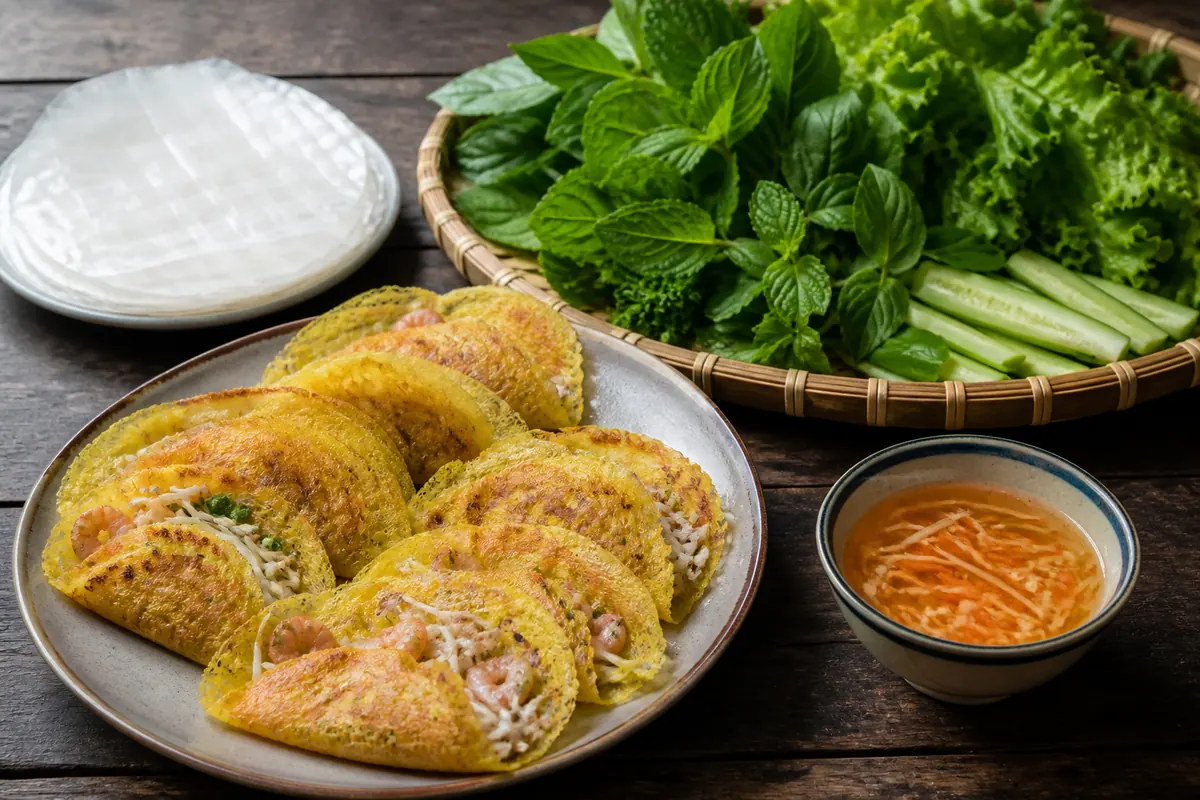
The wrap completes the dish
The local eating experience often uses relatively small, freshly fried pancakes. You cut or break the hot banh xeo, place it with herbs and vegetables in rice paper, roll it, then dip it in sauce.
Use a manageable piece of pancake, add greens and cucumber or other vegetables, wrap firmly, then dip. Staff will often demonstrate if you ask.
The wrapper, herbs and dipping sauce are not decorative side dishes. They temper the fried pancake and create the full contrast of hot, crisp, fresh and savory.
Eat banh xeo soon after it arrives. Once the pancake sits, its defining crispness fades. Sizes, fillings, wrappers and sauces vary across Central Vietnam and between Hoi An vendors, so this is practical local guidance rather than a universal rule.
Use our complete Banh Xeo guide for the wrapping sequence, sauce variations and regional comparison →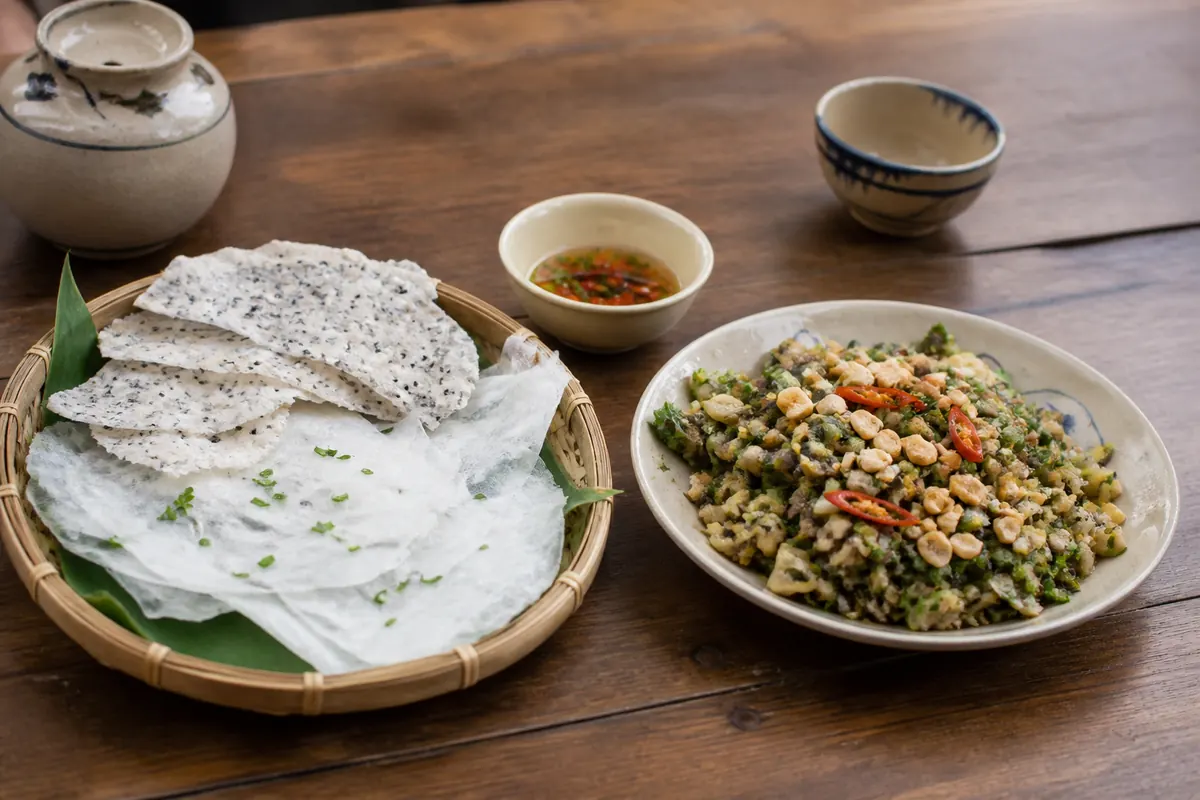
A Cam Nam pairing
Banh dap combines soft, thin fresh rice paper with crisp grilled rice paper. Pressing or “smashing” the layers helps them cling together before you break off pieces and dip them.
Hoi An's heritage portal connects Cam Nam with banh dap and stir-fried clams served with crisp rice paper. Its local account describes clams gathered from the river and cooked with aromatics, spices and peanuts, while crisp rice paper can be used to scoop them.
It offers a different texture and setting from the better-known Ancient Town dishes, and it connects food with Cam Nam's riverside history without needing to call the experience untouched or “more authentic.”
Travelers avoiding shellfish or the fermented fish-based dipping sauce should ask carefully about ingredients. Hoi An wontons are a practical alternative for the shortlist, though fillings and sauces still require checking.
Banh dap and clams may be ordered separately as well as together. Ask how the restaurant serves them instead of assuming every plate follows the same format.
A graceful specialty
White Rose is the visitor-friendly name for Hoi An's steamed banh bao and banh vac dumplings, commonly filled with shrimp or pork mixtures and served with fried shallots and dipping sauce. Reputable tourism sources describe a specialist family producer supplying the dumplings around Hoi An, but recipe and well-water stories are still often presented as family tradition rather than independently documented history.
It is worth trying. Our editorial judgment is simply that a time-limited first visit does not have to rank it above cao lau, chicken rice, banh xeo or Cam Nam foods.
A modern visitor ritual
Mot's herbal drink is popular with visitors and visually associated with a walk through the Ancient Town. Enjoy it as a refreshing contemporary stop if it appeals to you.
HAL does not present its social-media visibility as proof that it is among Hoi An's most historically important foods or drinks.
Look beyond the photograph
A market visit becomes useful when ingredients start answering questions: what people buy, how they judge it and how it becomes a meal.
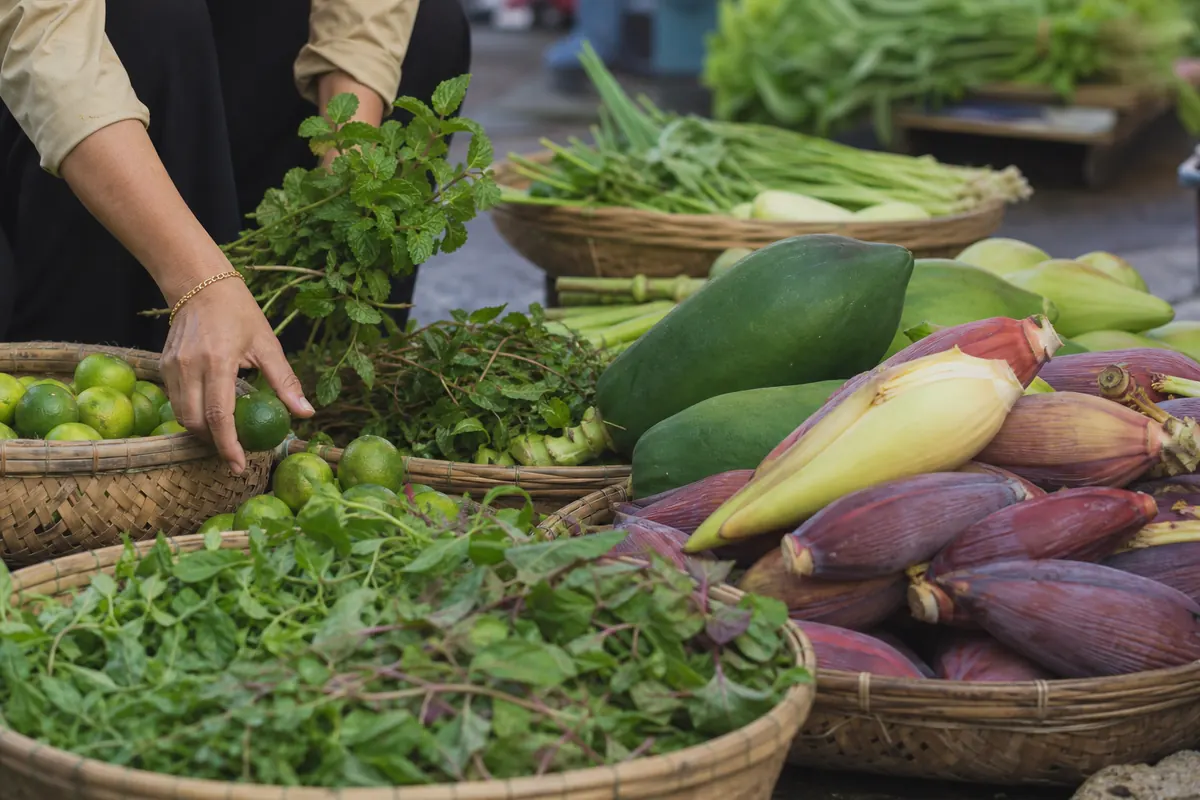
Based on current local observation, roughly 06:00–08:00 is the strongest window for active produce, meat, fish and seafood trade; 07:30–09:00 can still be useful. These are planning windows, not guaranteed opening hours for every stall or day.
Notice herbs, green papaya, banana blossom, spices, sauces and unfamiliar produce. Tra Que's vegetable-growing tradition is officially associated with herbs and greens used in dishes including cao lau, Mi Quang and banh xeo, but not every herb in every Hoi An meal should automatically be claimed as Tra Que produce.
The evening market is a different experience: useful for snacks and atmosphere, but not a substitute for observing the morning food trade.
Use our full market guide to plan when to go and what to notice →Reduce risk, never assume zero risk
Choose a busy stall, watch the food being cooked, and eat it piping hot.
Busy turnover can be a useful signal, but it does not guarantee safety. Use it with other observations: whether cooked food is protected, whether raw and cooked ingredients are kept apart, whether equipment looks clean and whether perishable food is held hot, chilled or on ice. Travelers with sensitive stomachs may prefer freshly cooked hot dishes over raw garnishes or ingredients.
WHO guidance for travelers emphasizes thoroughly cooked food served steaming hot, separation of raw and cooked food, safe water and appropriate holding temperatures. No visual check can confirm every food-handling condition.
Public-health basis: WHO Guide on Safe Food for Travellers and WHO/FAO street-food guidance.
From ingredient to plate
For travelers who want to understand why the dishes taste the way they do, a cooking class with a useful market visit can connect ingredients, preparation and eating—especially when the guide lets guests smell, taste and identify produce rather than only naming it.
Choose a cooking-focused format when technique and kitchen time matter. Choose an all-in-one format when you deliberately want the market, basket boat and cooking in one half-day.
Check inclusions before separately visiting Cam Thanh or booking a boat-only experience; many classes already include them.
One flexible framework
This is a way to spread the eating, not a rigid itinerary. Availability varies, so use it as a sequence rather than a timetable.
Walk through the active food areas, then choose a modest breakfast or snack rather than trying several full dishes immediately.
Cao lau or chicken rice makes a clear first meal. Give it enough attention to understand the components.
A drink, banh mi shared between two people or a break may be more useful than forcing another specialty.
Try banh xeo for the wrap experience, or cross toward Cam Nam for banh dap and clams if shellfish and fish sauce suit you.
The HAL take
You do not need to finish every famous-food checklist. A few well-chosen dishes, eaten with their textures and accompaniments understood, can tell you more about Hoi An than a rushed sequence of bites.
We separate local observation, sourced context and editorial judgment according to our editorial methodology.
Food context checked against the Vietnam Tourism food guide, Da Nang tourism's cao lau reference, Hoi An heritage's Cam Nam account and the official Tra Que village reference.