The batter
Commonly rice-flour based, spread thinly in a hot oiled pan. Turmeric, coconut milk, soybean, spring onion or other additions depend on the cook and region.
A practical first-timer guide · Reviewed August 2026
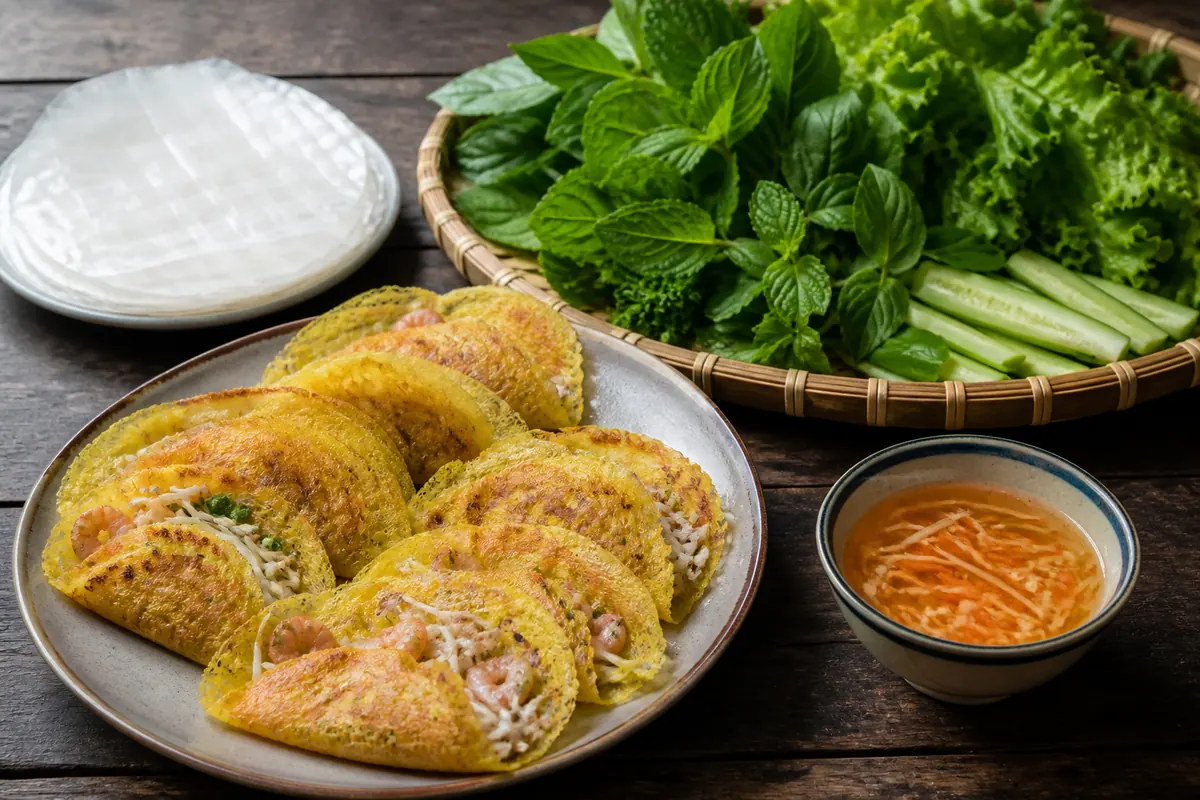
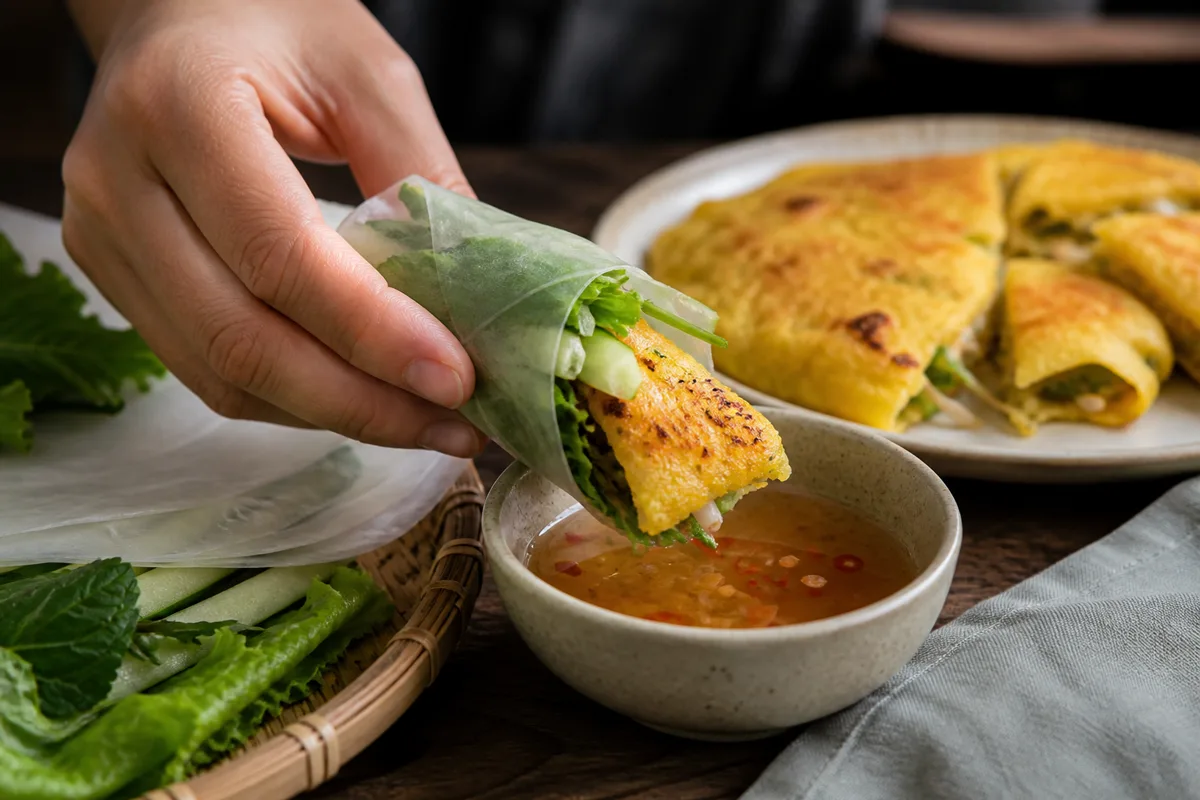
Hoi An-style banh xeo is a small, crisp savory pancake best understood as a wrap: break off a hot piece, add herbs and vegetables, roll it in rice paper when provided, then dip it in the accompanying sauce.
Quick answer
The dish
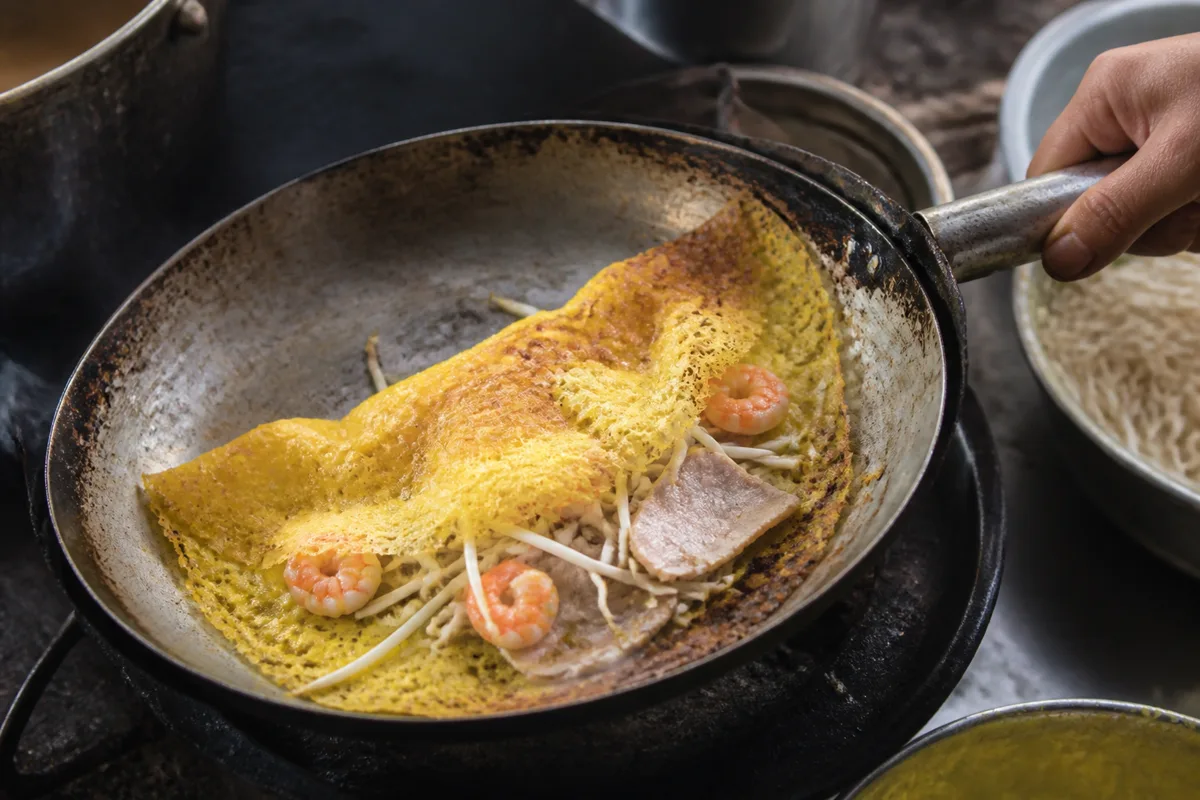
Banh xeo is a savory Vietnamese pancake made by pouring a thin batter into a hot, oiled pan with fillings such as shrimp, pork and bean sprouts. The batter sets around the ingredients and develops a crisp edge before the pancake is folded.
Rice flour is a common base. Turmeric is commonly used for yellow color, but batter formulas vary; coconut milk is present in some recipes and regional styles, not a universal Hoi An requirement. The Hoi An heritage portal also describes local batter using rice flour and soybean, showing why one nationwide recipe should not be assumed.
A broad regional tendency
Official Hoi An sources describe Central and Hoi An pancakes as smaller than the large southern format. The compact size makes it easier to cook several crisp pancakes and divide each one into pieces for wrapping.
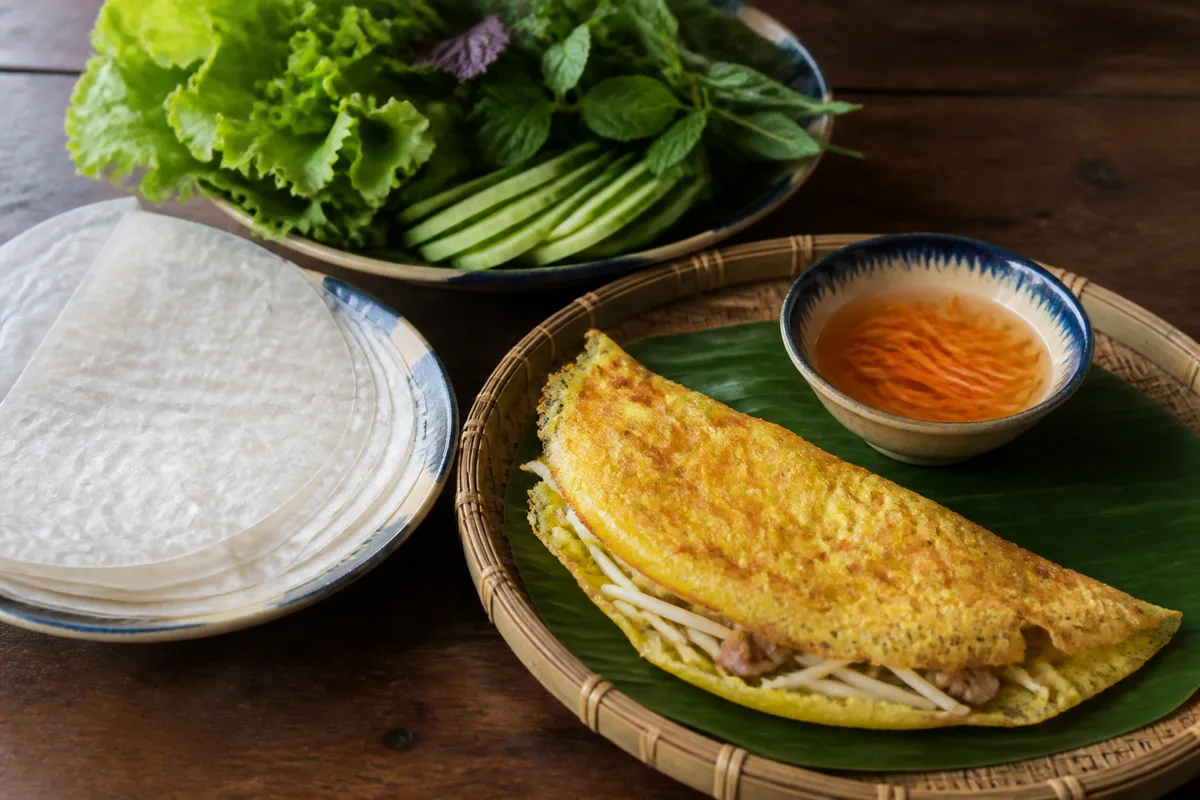
Hoi An servings often emphasize shrimp, bean sprouts and thin pork, followed by herbs, greens, rice paper and dipping sauce. That is a useful local pattern, not a fixed definition: fillings, batter, wrapper, vegetables and sauces change between cooks.
The practical difference for a visitor is scale and eating style. Do not expect one large pancake to be placed in front of you as a complete, self-contained plate.
Read the serving
Commonly rice-flour based, spread thinly in a hot oiled pan. Turmeric, coconut milk, soybean, spring onion or other additions depend on the cook and region.
Shrimp, thin pork and bean sprouts are common Hoi An descriptions. Mung bean, onion and other vegetables may also appear.
Herbs, lettuce, greens and cucumber where served cool and lighten the fried pancake.
Dry rice paper commonly turns the components into a hand-held roll. Some places may use leaves or a different wrapper setup.
The sauce connects the crisp, savory and fresh components. Its ingredients and thickness can change the whole experience.
Information visitors often miss
Eating only the fried pancake gives you the richest and heaviest part of the dish. The complete serving is designed around contrast: crisp and warm pancake, cool herbs and vegetables, a flexible wrapper, savory filling and a measured amount of sauce.
The herbs are not decorative. The wrapper is not just packaging. Together they control the ratio of fried food to fresh ingredients and make each bite easier to manage.
A practical sequence, not etiquette
Use one sheet of rice paper or the wrapper the restaurant serves.
Start with a modest amount of greens and cucumber where available.
Break or cut the hot pancake so the roll can close without crushing everything.
Fold firmly enough to hold the components, without worrying about a perfect shape.
Try the house sauce before adding chili or other condiments.
The sauce is not universal
You may receive a light fish-sauce-based dip, a thicker sauce involving soybean or peanuts, or a house-specific preparation. Official Hoi An sources themselves describe more than one style, including sweet-sour fish sauce and thicker soybean-peanut sauce.
That variation matters for taste and dietary needs. A thicker sauce may feel richer and nuttier; a lighter sauce may emphasize acidity, sweetness, chili and fish sauce. Neither should be declared the only “authentic” Hoi An option.
Broad tendencies, not rigid categories
| Feature | Hoi An / Central tendency | Southern tendency |
|---|---|---|
| Size | Generally smaller and easier to divide into wraps | Often much larger, particularly in the Mekong Delta |
| Serving impression | Several compact pancakes may form the meal | One large pancake may dominate the plate |
| Common fillings | Shrimp, bean sprouts and thin pork are common descriptions | Pork, shrimp and bean sprouts are also common, often in a fuller pancake |
| Batter | Rice-based local formulas vary; coconut milk is not assumed | Coconut milk is common in many southern recipes, but not universal |
| How it is eaten | Rice paper, herbs, vegetables and dipping sauce are commonly served | Often wrapped in lettuce or greens with herbs and nuoc cham |
Vietnam has many local versions beyond these two broad patterns. Individual kitchens may cross the tendencies shown here.
Confirm the whole serving
Common Hoi An-style versions may contain shrimp, pork and animal-based dipping sauce. Vegetarian and vegan adaptations exist, but the filling, batter and sauce all need confirmation.
Rice flour is common, yet the finished dish should not automatically be called gluten-free. Batter mixes, seasoning, soy sauce, dipping sauce, shared pans, utensils, oil and preparation surfaces can introduce wheat or cross-contact.
HAL cannot verify individual kitchens or guarantee an allergy-safe preparation.
Timing protects the texture
Eat it soon after it leaves the pan. Steam from the filling and time on the plate gradually soften the shell, reducing the contrast that makes the wrapped bite work.
Hoi An heritage material associates hot banh xeo with cooler and rainy weather, and owner observation agrees that this is an especially enjoyable context. Treat that as local food culture and seasonal atmosphere—not a rule or a guaranteed “best season.”
Decision support
If your first visit includes enough meals, try both rather than choosing a winner.
The HAL view
Yes for most first-time visitors. It shows how Vietnamese meals often depend on assembly and balance rather than one centerpiece: fried food becomes lighter and more interesting when combined with herbs, wrapper and dipping sauce.
It may be less suitable if you dislike fried foods, need common allergens controlled without clear kitchen communication, or want an extremely quick grab-and-go meal. The wrapping takes a little attention, and that is part of its appeal.
Technique becomes visible
A cooking class can make batter consistency, pan heat, crisping, filling, wrapping and dipping sauce easier to understand. Check the actual class menu first: banh xeo is not included in every program.
Compare Hoi An Cooking ClassesExplore more Hoi An food
How this guide was checked
Local format, batter descriptions, sizzling-name context and rainy-weather association were checked against the Hoi An heritage portal and its Vietnamese local feature. Eating format was cross-checked with Vietnam Tourism. Southern scale was compared with its Mekong Delta guide.
Where recipes and sauces differ, HAL describes tendencies rather than declaring one universal formula.