Cultural exchange
The urban fabric reflects a fusion of local traditions with foreign influences—principally Chinese and Japanese, with later European elements—created through international commerce.
First-time heritage guide · Reviewed August 2026
Hoi An Old Town is not one attraction. It is a compact historic urban area where streets, houses, assembly halls, worship spaces, a covered bridge, the riverfront, shops and a working market still form one connected townscape.
A district, not a single monument
The World Heritage property covers a historic trading-town ensemble on the north bank near the mouth of the Thu Bon River. Walking through it means experiencing a street plan and living commercial area; entering individual heritage buildings is a separate layer of the visit.
That distinction matters. You can understand the scale, façades, rooflines, river relationship and present-day street life simply by moving through the area. Selected ticketed interiors then reveal domestic layouts, community institutions and religious use that are not visible from outside.
Do not reduce Old Town to the bridge, lanterns or one famous street. Its value is the relationship between the buildings, streets, water and communities.
Why the whole town matters
UNESCO inscribed Hoi An Ancient Town in 1999 under criteria (ii) and (v). It identifies the town as an exceptionally well-preserved small trading port active from the 15th to the 19th centuries.
The urban fabric reflects a fusion of local traditions with foreign influences—principally Chinese and Japanese, with later European elements—created through international commerce.
Timber-frame buildings, narrow streets, tiled roofs, quays and plots oriented between street and river preserve the logic of a traditional Asian trading port.
Source basis: UNESCO World Heritage Centre, property 948 and inscription decision; reviewed 29 August 2026.
Look for types, not rankings
A useful first visit samples different forms of heritage. The goal is not to complete a universal “top ten,” but to understand how trade, home, worship and public space came together.
Narrow streets, attached timber-frame buildings, tiled roofs, façades and river-facing plots reveal how the trading town worked as a whole.
An iconic covered wooden bridge with a small temple component—important, but only one part of the larger urban heritage.
Community buildings associated with Chinese congregations make cultural exchange visible through architecture, worship and communal life.
Merchant and family houses help explain the connection between street-facing commerce, domestic space and access toward the river.
Pagodas, temples and family cult houses show that Old Town is living cultural space, not simply a preserved commercial façade.
The quay, river edge and working market connect the historic port layout with present-day trade and everyday activity.
Icon, not the whole story
The covered wooden bridge and its temple component have become Hoi An's most recognizable landmark. UNESCO's current property description places the surviving form in the 18th century and treats it as part of the wider preserved townscape.
Accounts of its precise first construction date and builders vary, and stories attached to the bridge often blend history with later tradition. For a first visit, its clearest significance is visual and urban: it marks the cultural exchange associated with the old port and connects parts of the historic street network.
Pause to understand its form, but do not let one crowded landmark replace the quieter work of noticing houses, community buildings and street patterns elsewhere.
Two different readings of the same place
No single perfect hour
Often a practical starting point for cooler walking, architectural observation and a different local rhythm. Conditions still vary.
Heat can make continuous walking less comfortable. Heritage interiors, lunch and a deliberate rest can give the middle of the day structure.
Changing light, lantern atmosphere, dining and riverfront activity become more prominent. This is not a guarantee of quiet streets.
Choose depth, not a stopwatch
Enough for basic orientation, a slow walk and one or two priorities.
Allows selected interiors, street detail, market or food context and useful pauses.
Best suited to travelers who want both heritage interpretation and the later lantern atmosphere.
These are planning units, not required durations. Your wider stay, weather and interest in interiors matter more than a fixed number. Compare how Old Town fits into a 1, 2, 3 or 4+ day visit.
A better way to move
Look at plot width, shutters, rooflines and the relationship between shopfront and deeper domestic space.
Choose different building types rather than several versions of the same experience.
Cross between busier waterfront areas and parallel streets instead of following one congested line.
Food, shade and observation are part of understanding a living town—not interruptions.
If possible, compare what you noticed in daylight with the town's evening use.
Changeable information · checked 29 August 2026
The Hoi An World Cultural Heritage Conservation Center currently asks visitors to purchase an entrance ticket and publishes two structures: VND 80,000 for the general townscape plus one of the Japanese Covered Bridge or Quan Cong Temple and two other selected monuments; and VND 120,000 for the general townscape, one of those two landmarks, one museum and three other selected monuments.
The same announcement says a ticket is purchased once and remains valid during the visitor's stay in Hoi An for up to three days. This helps distinguish walking through the urban area from using the ticket to enter a selection of heritage attractions.
The town is still used
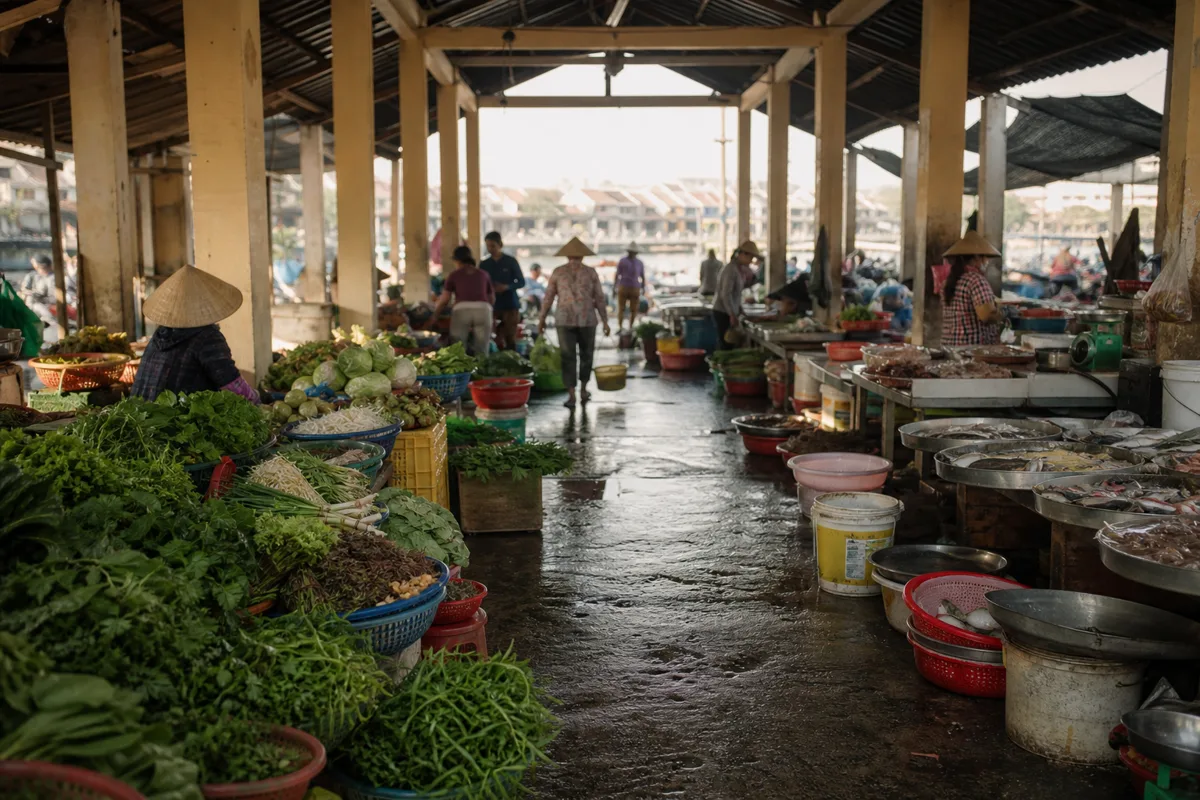
Hoi An Market adds living food and trade activity to the architectural story. It is not simply another monument, and its working rhythm deserves a more purposeful visit than a quick photograph. Use the Hoi An Market Guide for timing, ingredients and etiquette.
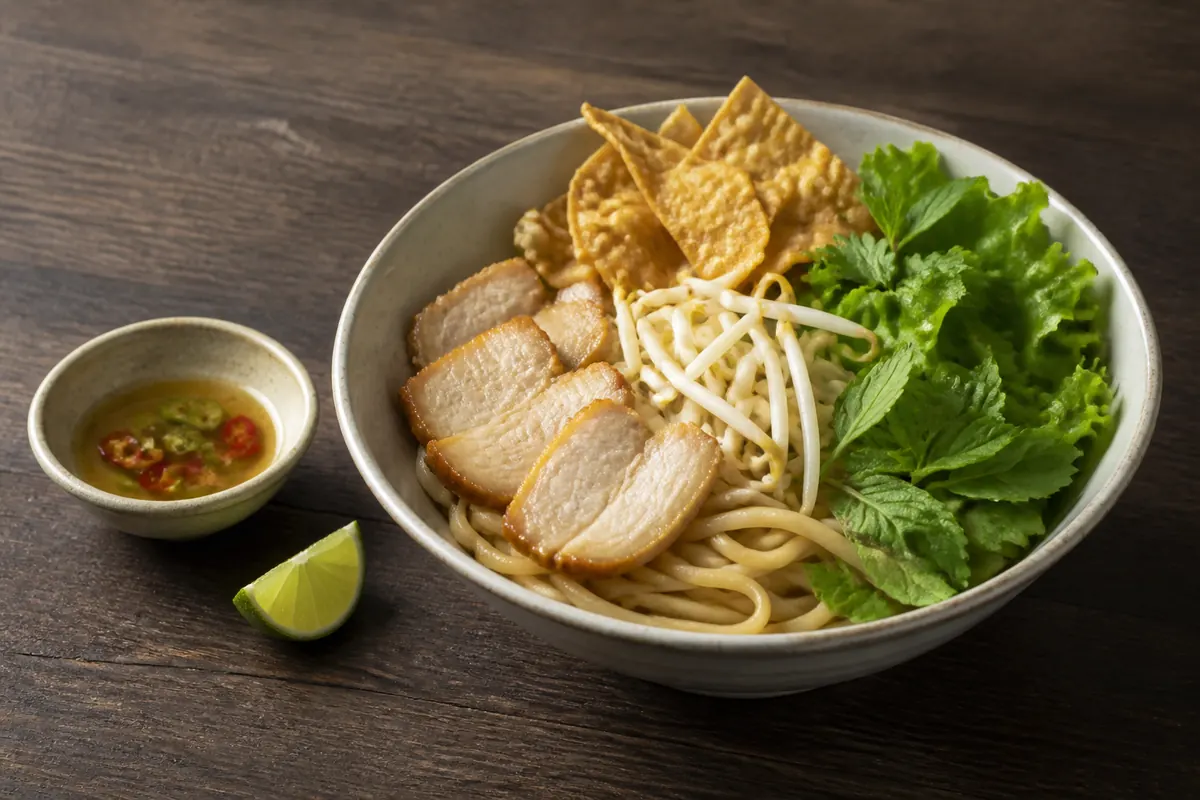
Food also gives walking a natural rhythm. Cao lau, banh xeo and other local dishes can be explored without turning this page into a restaurant list. Start with the Hoi An Food Guide.
Images are HAL-generated editorial illustrations, not documentary photographs of a specific vendor, market scene or restaurant.A gentler first visit
Lanterns are memorable, but architecture, materials and street structure are easier to understand in daylight.
Some buildings remain places of worship, community life, business or residence.
A few selected interiors usually provide more context than racing through every included site.
Move between the river edge and quieter parallel streets to understand more of the town.
Countryside, Cam Thanh, cooking, food and nearby heritage create a much wider destination.
A pause over food or a drink can be part of a better visit, not time lost from a checklist.
Living heritage
Follow signs inside heritage buildings, keep worship and community spaces respectful, and ask before taking close-up photographs of people. Avoid blocking entrances or working businesses while composing photographs.
With children, plan shorter interior stops, shade and regular breaks. Watch carefully near the riverfront and wherever bicycles or motorbikes are present. See the practical family guide.
One core layer, not the whole destination
Old Town provides essential orientation, but Hoi An also includes countryside, Cam Thanh, food and market culture, cooking experiences and family activities. Nearby My Son adds a different heritage context.
A living historic trading town: streets, homes, commerce, community buildings and river relationship.
A religious and archaeological landscape associated with Champa. It complements Old Town rather than replacing it.
Understand My Son Sanctuary →Where it fits
For a first visit, Old Town deserves a meaningful daylight block and, when possible, a return in the evening. On a multi-day trip, it does not need to occupy every morning and afternoon. Use it as the historical centre of a wider Hoi An experience.