A sacred centre
The temple groups had a religious function. Official heritage sources identify Shiva as the principal Hindu deity associated with the sanctuary, while the wider site also expressed royal authority.
First-time visitor guide · Reviewed August 2026
My Son is a group of Champa tower-temples in a forested valley outside Hoi An. The visit makes most sense when you understand both the sanctuary's religious importance and the practical reality: travel time, outdoor walking, heat and ruins that need interpretation.
Start with the place
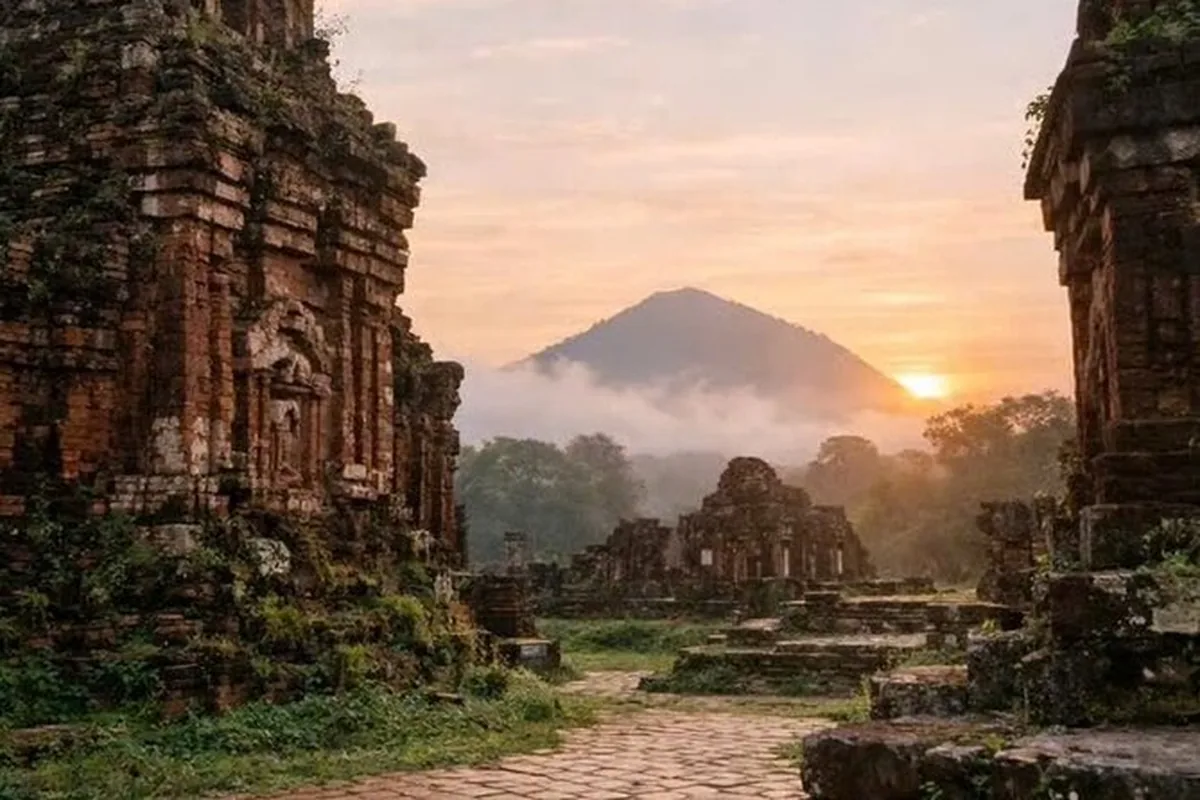
My Son is a UNESCO World Heritage Site associated with the Champa Kingdom. Its surviving brick tower-temples stand in a valley in central Vietnam, roughly 35–40 kilometres from Hoi An by current official tourism guidance.
UNESCO describes My Son as the religious and political capital of Champa for much of its existence. Construction and development extended from approximately the 4th to the 13th centuries, so visitors are not looking at one building from one moment, but at the remains of a sanctuary that changed across many centuries.
Cultural context
UNESCO inscribed My Son in 1999 under criteria (ii) and (iii): for the way Champa adapted influences from Indian Hindu art and architecture, and for the sanctuary's evidence of Champa's importance in Southeast Asian history.
The temple groups had a religious function. Official heritage sources identify Shiva as the principal Hindu deity associated with the sanctuary, while the wider site also expressed royal authority.
The towers are important for their brick construction, carved decoration and the different architectural phases visible across the site.
The surrounding valley is part of the experience. The relationship between monuments, mountains and sacred setting helps explain why My Son is more than a collection of isolated ruins.
Read the ruins carefully
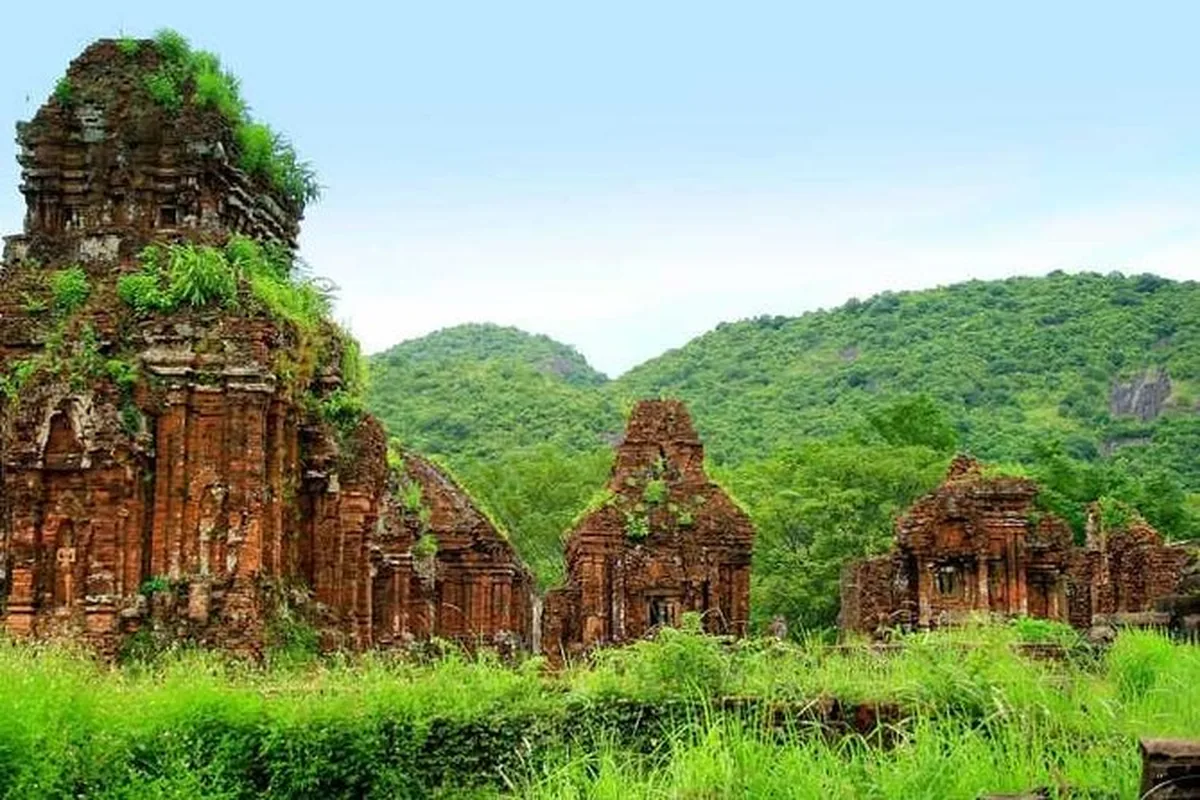
Expect surviving tower-temples, damaged structures, architectural fragments, carved details and active conservation context rather than a completely intact ceremonial complex.
UNESCO records damage during the Second World War, the First Indochina War and especially the Second Indochina War. Conservation resumed after Vietnam's reunification and has involved Vietnamese and international teams.
This mixture of survival, loss and restoration is part of what visitors need to understand. It should be approached as a protected archaeological site—not as a reconstructed theme park.
The practical reality
From Hoi An, My Son is normally a half-day excursion once road travel and time at the sanctuary are combined.
There is an internal shuttle for part of the approach, but the temple groups still involve outdoor walking and standing.
The valley is green, but visitors should still expect exposed sections, humidity and heat rather than continuous shade.
A slower visit makes it easier to notice brickwork, carvings and differences between groups instead of treating the site as a quick photo stop.
Comfort before clock time
Usually the most practical starting point for travelers concerned about heat. Softer light can also help with photography, although weather and visitor numbers are never guaranteed.
Often the most demanding period because much of the visit is outdoors. Heat-sensitive travelers may find the walking less comfortable.
Can offer different light and may protect a relaxed Hoi An morning, but return timing and changing weather need more attention.
HAL does not publish a guaranteed “quietest hour.” Conditions vary by season, weather, holidays and tour arrivals.
Prepare for an outdoor heritage site
Follow site signs and staff instructions. Do not climb, carve, lean on or touch protected brickwork and architectural fragments.
Interpretation changes the visit
Transport is a separate decision
Yes. A visitor does not need to join a group tour to enter and explore the sanctuary. The main decisions are how to travel from Hoi An, how much interpretation you want and whether you are comfortable organizing the return journey yourself.
A tour may simplify pickup and guiding. Independent transport offers more control over pace. Current fares, admission, opening hours and performance schedules should always be checked with an official source close to the visit date.
An honest fit check
Different kinds of history
Hoi An is a living historic trading town where homes, shops, streets and community life remain part of the visitor experience. My Son is an archaeological and religious sanctuary associated with Champa.
One helps explain commerce and urban cultural exchange; the other reveals a sacred landscape, Hindu influence and Champa architecture. Travelers interested in history may value both for different reasons.
Protect the rest of your trip
For a three-day visit, My Son works best as the main cultural excursion for one half day. Avoid treating it as a small stop to squeeze between several unrelated activities.
If Ancient Town, local food and a hands-on experience matter more, My Son can remain optional rather than becoming another box to tick.
See the relaxed 3-day itinerary →Planning from Hoi An
Our separate comparison page explains morning, afternoon, group, private and active visit styles. Use it only if organized transport or guided interpretation would improve your trip.
Compare My Son Tours from Hoi AnHow this guide was checked
Historical and heritage claims were checked against the UNESCO World Heritage Centre, its inscription and conservation records, and current official Vietnam/Da Nang tourism guidance.
Operational details can change. HAL intentionally omits current prices, exact hours and performance schedules from this evergreen guide. Read more about our editorial methodology.